
The relationship between travel and work continues to change dramatically in 2026. Remote professionals are no longer limited to taking a two-week vacation once a year; many are building travel directly into their working lives and spending weeks or months in destinations that offer reliable internet, good infrastructure, comfortable accommodation, and legal options for remote work. According to MBO Partners’ latest digital-nomad research, around 18.5 million American workers identified as digital nomads in 2025, representing growth of roughly 153% compared with 2019. At the same time, governments have continued turning what was once an informal lifestyle into formal immigration policy. EY reported that, as of February 2026, more than 48 jurisdictions worldwide offered dedicated digital-nomad or remote-work visas or permits. These developments are among the biggest travel trends 2026, affecting hotels, airlines, coworking spaces, employers, and destinations. This digital nomad news roundup looks at what is changing, which countries remote workers are watching, how accommodation is adapting, and what travelers should consider before turning their next holiday destination into a temporary office.
Remote Work Travel Is Becoming a Mainstream Lifestyle
Digital Nomads Are No Longer a Small Travel Niche
The growth of digital nomadism is one of the clearest signs that remote work travel trends are becoming part of the mainstream travel industry rather than remaining a small backpacker niche. MBO Partners found that 18.5 million American workers identified as digital nomads in its 2025 study, and the number was 153% higher than in 2019. The research also shows that digital nomads include both independent professionals and people with traditional employment, which is important because the lifestyle is no longer limited to freelancers running businesses from laptops. Designers, marketers, consultants, technology workers, educators, writers, and other professionals are increasingly combining location-independent work with travel. MBO also found strong interest among people who are not yet nomads, although only a portion of those who say they want to adopt the lifestyle eventually do so. For the travel industry, the important development is that millions of working travelers need very different services from traditional tourists. They may stay for a month rather than a weekend, require fast internet every day, need quiet places for meetings, and choose destinations according to visas, taxes, affordability, and quality of life rather than sightseeing alone.
Digital Nomad Visas Continue to Shape Travel Trends 2026
Countries Are Moving From Temporary Experiments to Formal Programs
One of the biggest pieces of digital nomad news in 2026 is how much more structured remote-worker immigration has become. EY’s March 2026 Global Immigration Index describes a clear evolution from the short-term, tourism-focused programs introduced around 2020 toward more predictable immigration frameworks offering longer stays and, in some cases, options for dependants. EY counted more than 48 jurisdictions with digital-nomad or remote-work programs as of February 2026 and noted that Europe accounted for about 40% of them. The report also identified additional countries preparing remote-worker pathways. This means a traveler planning a workation now has considerably more legal options than a few years ago, but the choices also require more research. Each country can impose different minimum-income levels, insurance conditions, application costs, tax requirements, background checks, and restrictions on working with local clients. A visa advertised as suitable for digital nomads should never be treated as permission to work anywhere in the world under identical conditions. For travelers planning several months overseas, understanding immigration requirements before choosing flights or non-refundable hotels has become an essential part of responsible remote-work travel planning.
Spain Remains an Important European Remote-Work Destination
Spain’s Telework Visa Continues to Attract International Professionals
Spain remains one of the most closely watched destinations in the European digital-nomad market. Its international telework visa allows qualifying non-EU nationals to live in Spain while performing professional activities remotely for organizations primarily based outside the country. Employees using the route generally work for companies outside Spain, while qualifying self-employed applicants can carry out some work for Spanish clients provided that activity does not exceed 20% of their total professional work. Applicants must also demonstrate relevant qualifications or at least three years of professional experience. The attraction goes beyond immigration rules. Madrid, Barcelona, Valencia, Málaga, and other Spanish cities combine coworking infrastructure, restaurants, public transportation, European connectivity, and large accommodation markets. For people following travel trends 2026, Spain demonstrates an important change in digital-nomad travel: destinations increasingly want visitors who are economically active and prepared to stay longer rather than tourists who arrive only for a few nights. Remote workers considering Spain should still check the specific financial, insurance, documentation, and tax requirements that apply to their circumstances before arranging an extended stay.
Thailand’s Destination Thailand Visa Is a Major Remote-Work Option
The DTV Gives Digital Nomads a Longer-Term Asian Alternative
Thailand continues to be one of the most important destinations in the remote work travel conversation because its Destination Thailand Visa, or DTV, specifically includes digital nomads, remote workers, foreign talent, and freelancers. Updated information from Thai authorities in 2026 confirms that the DTV has five-year validity and allows stays of up to 180 days per entry. The Royal Thai Embassy in London states that an extension of up to another 180 days may be available for an individual entry, while applicants must leave and re-enter after reaching the maximum permitted stay for that entry. Requirements can vary according to the embassy or consulate where an application is submitted. For example, updated U.S. guidance requires financial evidence equivalent to at least 500,000 Thai baht and documentation demonstrating remote-worker, freelancer, or professional status. Bangkok and Chiang Mai have already been well known among remote workers because of accommodation choices, internet access, food, and coworking infrastructure, and the DTV gives eligible travelers a clearer legal framework for longer stays. Applicants should always consult the Thai mission responsible for their location because local document requirements can differ.
Japan Offers a Different Kind of Digital Nomad Experience
Japan’s Program Focuses on Shorter Six-Month Stays
Japan is another destination that has entered the formal digital-nomad market, but its program operates differently from long-term options such as Thailand’s DTV. Japan’s Ministry of Foreign Affairs states that its digital-nomad visa is designed for eligible individuals who want to work remotely in Japan for a period of up to six months, and the period cannot be extended under that visa category. Spouses and children can also qualify under the accompanying digital-nomad provisions when the relevant conditions are met. For remote workers, Japan offers a combination that is difficult to find elsewhere: advanced transportation, strong digital infrastructure, major business centers, distinctive regional cultures, and cities ranging from Tokyo and Osaka to quieter locations suited to slower travel. A six-month limit may actually suit professionals who prefer “test living” rather than committing immediately to a multi-year residence permit. Japan also illustrates an important travel trend in 2026: digital-nomad visas are no longer following one standard model. Some countries want long-term residents, while others use the category to attract financially independent remote professionals for medium-length stays without creating an indefinite residence pathway.
Portugal Remains Part of the Digital Nomad Conversation
Lisbon Continues to Combine Remote Work and Longer-Stay Travel
Portugal remains relevant to anyone researching European remote-work destinations. AIMA, Portugal’s migration authority, continues to maintain a residence route for people performing professional activity remotely for employers or clients outside Portuguese territory. Its current guidance states that the corresponding temporary residence authorization is valid for two years from issuance and can subsequently be renewed for successive three-year periods when the applicable requirements are satisfied. Lisbon remains particularly attractive because it combines international air connections, coworking facilities, restaurants, English-friendly tourism infrastructure, and a broad range of hotels and serviced apartments. However, remote workers need to separate lifestyle appeal from immigration compliance. A hotel booking, attractive neighborhood, or cheap flight does not determine whether someone qualifies for Portuguese residence, and taxation can become important for people spending significant time there. For travelers following digital nomad trends, Portugal also shows why longer accommodation formats are becoming more valuable. Someone planning several weeks in Lisbon may prefer an aparthotel with a kitchen, laundry facilities, coworking space, and a desk instead of a traditional room designed mainly for sleeping between sightseeing days.
Longer Stays Are Replacing the Traditional Workation
Remote Workers Are Testing Cities Before Making Bigger Commitments
One of the most interesting travel trends 2026 is the shift from the simple “workation” toward longer periods of test living. Instead of taking a laptop on a one-week beach holiday, some remote workers are spending several weeks or months in a destination to understand whether it works as a genuine everyday base. This involves testing internet reliability, supermarkets, public transportation, healthcare access, weather, coworking communities, accommodation costs, and time-zone compatibility with employers or clients. Recent reporting on remote-work cities highlights how travelers are also looking beyond famous digital-nomad hubs. Lisbon, Medellín, and Chiang Mai remain familiar names, but Seoul, Tokyo, Da Nang, Cebu, Cape Town, Belgrade, and Sofia are among destinations receiving greater attention in 2026 as remote workers weigh safety, healthcare, connectivity, transport, affordability, and overall quality of life. This trend creates an opportunity for hotels because many nomads do not want to sign a six- or twelve-month apartment lease immediately. A comfortable hotel or serviced apartment for the first few weeks gives them time to explore neighborhoods before deciding whether to stay longer.
Remote-Work Compliance Is Becoming More Important
A Laptop Does Not Remove Visa, Tax, or Employer Responsibilities
The romantic version of digital-nomad life often suggests that a laptop and Wi-Fi are all a person needs, but remote work industry news in 2026 is increasingly focused on legal and corporate compliance. The International Bar Association’s 2026 Digital Nomad Report highlights the immigration, tax, and employment challenges that arise when employees perform their normal jobs from a country different from the jurisdiction where their employer is based. Depending on the destination and length of stay, questions can arise around work authorization, personal taxation, social security, payroll obligations, permanent establishment risk for employers, insurance, and local labor rules. These concerns explain why more companies now use formal “work from anywhere” policies rather than giving employees unlimited permission to work from whichever country they choose. Remote travelers should obtain approval from their employer before relocating and verify that their immigration status actually allows the activity they intend to perform. Freelancers need similar caution because earning money online does not automatically exempt them from local regulations. For 2026 nomads, successful travel planning increasingly means combining flexibility with careful research rather than assuming that being physically outside an office removes legal responsibilities.
You might Interested: Remote Work Travel Trends 2026: What Digital Nomads Need to Know
Hotels Are Adapting to the Remote-Work Traveler
Wi-Fi, Kitchens, Laundry and Coworking Matter More Than Ever
Digital nomads evaluate hotels differently from conventional leisure travelers. Someone staying for two nights may care primarily about location, breakfast, and tourist attractions, while a person spending three weeks in one city needs to know whether the Wi-Fi supports video calls, whether there is a comfortable desk, how expensive laundry will be, and whether food preparation is possible. Serviced apartments and extended-stay hotels are particularly well positioned for this market because a kitchen and washing machine can dramatically improve comfort and reduce costs during a month-long stay. Coworking areas are another increasingly valuable feature because they allow guests to separate work from sleep without paying for an additional office membership. This is why travelers researching remote work travel trends 2026 should look beyond star ratings. A five-star hotel designed primarily for weekend luxury may be less practical for daily work than a well-designed four-star aparthotel with a kitchen, workspace, fast internet, and flexible stay options. Booking.com and Trip.com can be useful for comparing these facilities, but travelers should also read recent guest comments about Wi-Fi reliability, noise levels, desk comfort, and room size before committing to an extended reservation.
Best Lisbon Hotels for Digital Nomads in 2026
Best for Coworking and Longer Stays
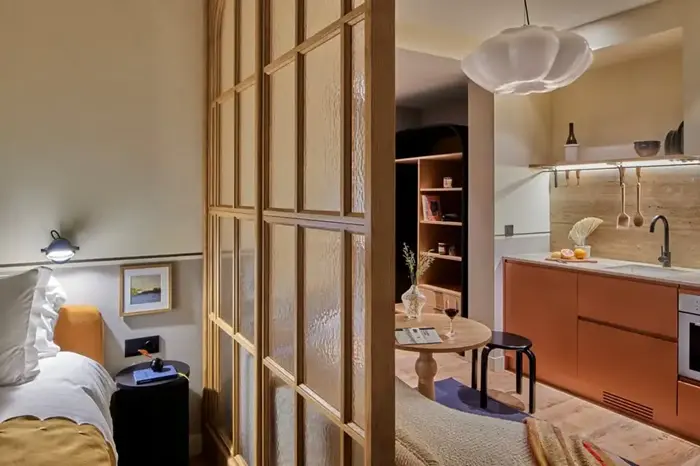
Locke de Santa Joana is one of the most natural hotel recommendations for this type of article because it combines traditional hotel services with facilities designed for longer stays. Trip.com describes the property as a Lisbon hotel with 370 serviced apartments, many of which include their own kitchens, while the property also provides coworking spaces, meeting rooms, restaurants, bars, a courtyard, outdoor pool, and gym. Booking.com additionally lists free Wi-Fi, a fitness center, and a central Santo António location near Avenida da Liberdade and Marquês de Pombal. Those features make the property particularly appealing to remote workers who want to stay for several weeks without feeling as though they are working every day from a standard hotel bedroom. A kitchen can reduce restaurant spending, while shared workspaces allow guests to change environments during longer work sessions. Travelers should compare room categories carefully because studios, apartments, terraces, and larger accommodation types differ substantially in space and amenities. Rates vary throughout the year, so checking your actual dates is far more useful than relying on a permanent nightly price quoted in a travel article.
View Locke de Santa Joana on Trip.com
Check Locke de Santa Joana on Booking.com
Best for a Stylish Central Lisbon Stay
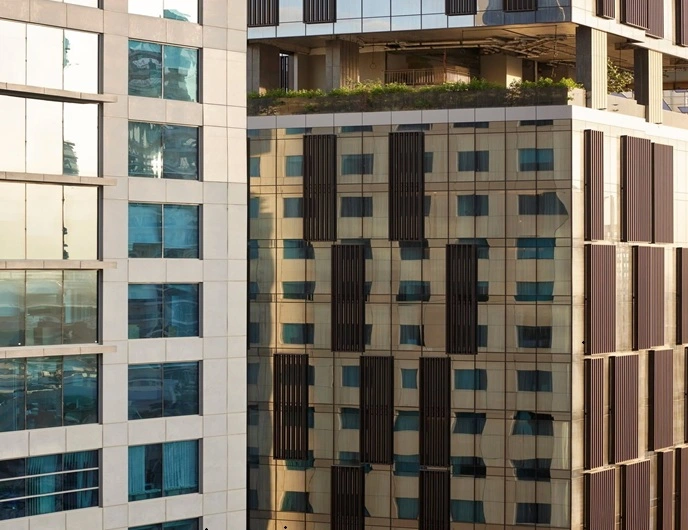
Mama Shelter Lisboa is a good alternative for remote workers who want a stylish hotel in central Lisbon while remaining close to restaurants and city attractions. Booking.com currently lists air-conditioned rooms with private bathrooms, refrigerators, free Wi-Fi and soundproofing, together with a restaurant, rooftop-style social spaces, terrace, bar, laundry services, and 24-hour reception. Its location in Santo António places guests within reasonable reach of several central Lisbon neighborhoods, making it practical for someone spending their first week in the city while deciding where to live longer term. Soundproofing can be particularly valuable for a remote worker handling calls with clients or colleagues in different time zones, while laundry facilities become much more important during a two- or three-week stay than during an ordinary weekend break. The property has a more social atmosphere than a traditional business hotel, so travelers who like combining work with restaurants, rooftop spaces, and an active city environment may find it especially attractive. Check your specific room type, cancellation terms, breakfast package, and recent Wi-Fi reviews before booking for an extended period.
See Mama Shelter Lisboa on Booking.com
Best for Couples or Solo Adults Wanting a Quieter Boutique Option
Upon Angels, listed on booking platforms as Upon Angels – Adults Only, provides another useful Lisbon option for adults who want a smaller property rather than a large serviced-apartment complex. Trip.com lists the hotel in Arroios close to Intendente Metro station, with Wi-Fi in public areas, a café, restaurant, bar, outdoor pool, and rooms equipped with conveniences such as espresso makers and electric kettles. Booking.com describes the property as adults-only and places it within walking distance or short transport connections of central attractions, with check-in from 3 p.m. and check-out until noon. For a digital nomad, the main appeal is the combination of location, connectivity, and a smaller boutique atmosphere. It may work particularly well for a couple working remotely together or for a solo traveler who wants to spend the first part of a Lisbon stay exploring Arroios, Baixa, and nearby central neighborhoods. As with any extended hotel booking, travelers should check individual room layouts because a good Wi-Fi connection does not necessarily mean every room has an ideal workstation.

View Upon Angels on Trip.com
Check Upon Angels on Booking.com
How to Choose a Hotel for Remote Work in 2026
Check the Work Setup Before Checking the Swimming Pool
The best digital-nomad hotel is not necessarily the hotel with the most luxurious facilities. Before booking, begin with the practical requirements that determine whether you can work comfortably every day. Reliable Wi-Fi should be the first priority, particularly if your job involves Zoom or Teams meetings, cloud-based applications, large file transfers, or video production. A desk and chair are equally important because working from a bed for several weeks quickly becomes uncomfortable. Next, look at noise levels, room size, laundry options, kitchen facilities, coworking areas, breakfast times, and transportation. Travelers working for North American employers from Europe may have meetings late in the evening, making soundproofing more important than it would be for a regular tourist. Flexible cancellation also deserves attention when a stay depends on visa approval or immigration processing. On Booking.com and Trip.com, do not judge a property only by its overall score. Read recent reviews specifically for terms such as “Wi-Fi,” “quiet,” “desk,” “work,” and “long stay.” A hotel that supports your working routine can make a month abroad feel sustainable rather than exhausting.
Slow Travel Is Becoming More Attractive to Digital Nomads
Moving Less Often Can Reduce Costs and Improve Productivity
The image of a digital nomad changing countries every week may look exciting on social media, but slower travel is often more practical for people who still need to deliver professional work. Staying in one destination for several weeks reduces repeated flights, airport transfers, check-ins, packing, and the productivity loss caused by constantly learning new surroundings. It can also make accommodation more economical because some hotels, serviced apartments, and rental properties provide better rates for longer stays. Slow travel allows remote workers to establish routines around exercise, grocery shopping, coworking, client calls, and weekends while still experiencing a new culture. This trend also fits the increasingly formal visa environment. A person who receives permission to spend several months in Thailand, Portugal, Spain, or another destination has less reason to rush through five countries in a short period. For the hotel industry, slow-moving digital nomads can be particularly valuable guests because they stay longer and use more everyday services. For travelers, the key is balancing flexibility with commitment: booking a hotel for the first week or two can provide a comfortable landing point before choosing a longer-term serviced apartment or rental.
AI Is Also Changing the Way Remote Workers Plan Travel
Digital Nomads Can Research Destinations Faster, but Verification Still Matters
Artificial intelligence is becoming another important part of travel trends 2026, particularly for people who plan complicated multi-country itineraries while maintaining full-time work. AI tools can help compare destinations, build packing lists, organize visa requirements, estimate time-zone differences, create travel budgets, translate information, and narrow hundreds of hotel choices into a manageable shortlist. This can save digital nomads substantial time because their travel decisions often involve more variables than a normal vacation. However, AI-generated information should not replace official immigration guidance. Visa requirements, minimum-income thresholds, tax rules, embassy procedures, and eligible nationalities can change, sometimes without older blogs being updated immediately. The best approach is to use AI for planning and organization but verify important legal information through government websites before paying fees or booking non-refundable travel. The same principle applies to hotels. AI can suggest properties with coworking, kitchens, or good locations, while Booking.com and Trip.com can provide current availability and reviews for the dates you intend to travel. Technology makes remote-work travel easier, but responsible travelers still need to confirm the details that could affect their legal status or finances.
Are Employers Becoming More Comfortable With Digital Nomads?
Remote Work Permission Is Still Different From Work-From-Anywhere Permission
A remote job does not necessarily mean an employee can work indefinitely from another country. This distinction is becoming more visible in 2026 as companies develop clearer policies around international remote work. MBO Partners’ research found that some traditionally employed digital nomads still travel without their employer fully knowing about their nomadic status, while others work for organizations that allow the arrangement under specific policies. From an employer’s perspective, cross-border working can create questions involving tax, employment law, payroll, immigration, cybersecurity, client confidentiality, and insurance. The International Bar Association’s 2026 report similarly emphasizes the compliance challenges multinational organizations face when workers perform their jobs from another jurisdiction. Employees interested in becoming digital nomads should therefore ask whether their company permits international remote work, how many days can be spent abroad, which countries are approved, and whether company devices or data can legally be accessed from the destination. This may sound less exciting than choosing a beachside hotel, but employer permission is one of the most important foundations of a sustainable nomad lifestyle.
Which Digital Nomad Destinations Are Worth Watching in 2026?
Established Hubs Face Competition From New Remote-Work Cities
Lisbon, Barcelona, Chiang Mai, Bangkok, and Medellín remain recognizable names in digital-nomad conversations, but the map is becoming much broader. A late-August 2026 report on remote-work cities highlighted Seoul, Tokyo, Da Nang, Cebu, Cape Town, Belgrade, and Sofia alongside established destinations. The reasons are revealing: remote workers are increasingly evaluating healthcare, safety, public transportation, business opportunities, internet infrastructure, and overall quality of life rather than searching only for the lowest daily cost. This could benefit destinations that were previously overlooked because they were not promoted as traditional backpacker hubs. It also means that travelers should choose a city based on their personal working situation rather than blindly following a “best digital nomad city” ranking. Someone working U.S. business hours may prefer Europe or Latin America because of time-zone overlap, while a freelancer with flexible hours might enjoy East or Southeast Asia. Hotel availability is another important factor. Destinations with serviced apartments, extended-stay hotels, coworking facilities, and strong public transport can make the first month of remote living significantly easier than places where travelers immediately need to arrange a private lease.
Frequently Asked Questions About Remote Work Travel Trends 2026
How Many Countries Have Digital Nomad Visas in 2026?
There is no single universal count because researchers define digital-nomad visas differently, and governments regularly introduce, rename, suspend, or change programs. However, EY’s Global Immigration Index reported that more than 48 jurisdictions offered digital-nomad or remote-work visas and permits as of February 2026. Other industry sources use broader definitions and produce higher totals by including programs that may not carry the “digital nomad” name but still allow certain remote professionals to reside legally. Rather than focusing only on the headline number, travelers should examine whether a specific program matches their circumstances. Some visas require a high minimum monthly income, some demand significant savings, and others restrict the applicant from receiving income from local clients. Programs also vary enormously in duration. Japan provides a six-month digital-nomad stay without extension under that category, while Thailand’s DTV is valid for five years and allows multiple longer entries. Portugal and Spain offer residence-oriented routes that operate differently again. The growing number of programs is good news for travelers, but comparing the details is more valuable than simply choosing the country with the most attractive marketing.
What Are the Biggest Digital Nomad Trends in 2026?
The biggest digital nomad trends in 2026 can be summarized as greater formalization, longer stays, wider destination choice, and increasing attention to compliance. Governments are treating remote workers as a distinct immigration category, while hotels and serviced-apartment operators are adapting their products for people who need to live and work rather than simply sleep between tourist activities. Digital nomads themselves appear to be moving beyond the idea that the lifestyle means constantly changing countries. Longer stays make it easier to create routines, reduce travel fatigue, control costs, and experience cities more deeply. At the same time, employers are paying more attention to where staff members perform their work because international remote work can create legal, tax, and security concerns. Destination choice is becoming more sophisticated as well. Internet speed and low prices remain important, but healthcare, transport, safety, community, visa stability, and accommodation quality are playing larger roles. Together, these developments suggest that digital nomadism is becoming less like an extended backpacking trip and more like a structured form of internationally mobile professional life.
What Should a Digital Nomad Look for in a Hotel?
For a digital nomad, a hotel should support everyday life as well as tourism. Fast and stable Wi-Fi is essential, but it should be followed by a usable desk, comfortable seating, quiet rooms, convenient power outlets, air conditioning or heating appropriate to the destination, laundry options, and access to food. A kitchen or kitchenette becomes particularly valuable during a stay of several weeks because eating every meal in restaurants can become expensive and inconvenient. Coworking rooms and meeting areas provide another advantage, especially for travelers who want some separation between their workspace and bedroom. Location should be judged according to everyday requirements such as supermarkets, metro stations, cafés, gyms, and coworking centers rather than only distance from tourist attractions. Remote workers should also read cancellation rules carefully when travel depends on a visa decision. Booking platforms such as Booking.com and Trip.com make it easy to compare current room options, but guest reviews are often the best place to learn whether the internet actually performs well and whether rooms remain quiet enough for professional calls.
Final Thoughts
Travel trends 2026 show that remote work and international travel are becoming more connected, but the digital-nomad lifestyle is also becoming more structured. Millions of Americans already identify as digital nomads, governments across the world now operate remote-worker visa programs, and destinations are competing for professionals who stay longer and spend money locally. Spain, Portugal, Thailand, and Japan demonstrate how different these programs can be, ranging from shorter six-month experiences to multi-year visa or residence possibilities. Meanwhile, remote workers are broadening their destination choices and paying greater attention to healthcare, transportation, quality of life, employer policies, and legal compliance. Accommodation is part of this transformation. Properties such as Lisbon’s Locke de Santa Joana, Mama Shelter Lisboa, and Upon Angels show how travelers can choose between serviced apartments, social hotels, and smaller boutique stays depending on how they prefer to work and live. The best approach is to research immigration requirements first, obtain employer approval where necessary, and then choose accommodation that genuinely supports your daily working routine rather than simply looking attractive in holiday photos.