
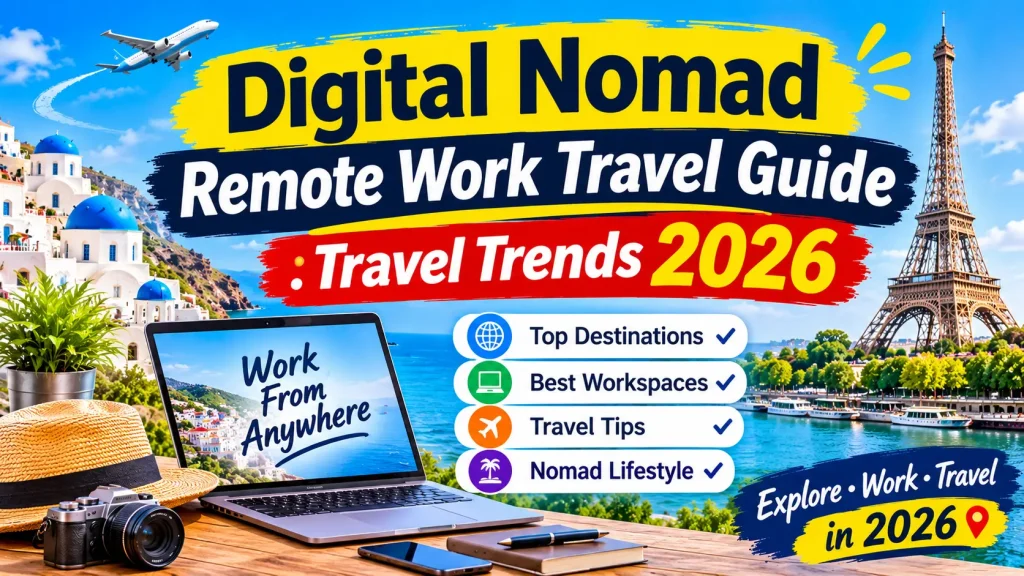
The way we travel and work collided permanently in the mid-2020s, and by 2026 the result is clear: digital nomad remote work travel has moved from niche experiment to mainstream lifestyle. Picture starting your morning Zoom call from a sunlit loft in Amsterdam, finishing a project deadline with ocean views in Bali, then hopping to a new city the following month without missing a beat. Location independence is no longer a dream reserved for freelancers with laptops; it is a structured, supported way of living that millions now pursue. This guide explores the biggest travel trends shaping the nomad lifestyle 2026, highlights the strongest workation destinations, and shows why hotels have become the smartest foundation for successful remote job travel. Far from being mere places to sleep, the right hotels now deliver fast WiFi, dedicated workspaces, long-stay flexibility, and built-in community that pure short-term rentals often struggle to match.
Why 2026 Is the Breakout Year for Digital Nomad Travel
Several forces converged to make 2026 the year digital nomad remote work travel truly scaled. Companies that once treated remote work as temporary now embed location flexibility into permanent policy. Dozens of countries refined or expanded digital nomad visas, lowering the legal barriers that once limited longer stays. Global internet infrastructure improved dramatically in secondary cities, while mobile eSIMs and hotel fiber connections removed the last major connectivity obstacles. At the same time, a cultural shift took hold: people began prioritizing experiences and autonomy over traditional office proximity. The result is a generation practicing true location independence, moving seasonally between climates and cultures while keeping careers intact. Hotels responded faster than many expected. Properties that once catered only to tourists now market themselves explicitly to remote workers, offering weekly and monthly rates, ergonomic desks, and on-site coworking. This evolution turned remote job travel from a logistical headache into a repeatable, enjoyable system.
You Might like: Malta Digital Nomad Visa: Full Guide to Requirements & Costs
Top Travel Trends 2026 Shaping the Nomad Lifestyle
Several clear patterns define travel trends 2026 for anyone living the nomad lifestyle. First is the explosion of intentional workation destinations — places that deliberately market themselves as productive yet restorative bases rather than pure vacation spots. Second is the preference for secondary cities and emerging hubs over the most overcrowded classics; travelers still love Lisbon and Bali, but they also seek quieter alternatives with better value and fewer crowds. Third is the rise of hotel hybrids that blur the line between accommodation and workspace. Fourth is the normalization of longer stays — four to twelve weeks rather than rushed ten-day trips — which rewards properties offering genuine long-stay hotel deals. Finally, well-being and community have become non-negotiable. Nomads no longer accept isolation or unreliable internet as the price of freedom. Hotels that deliver fast connectivity, quiet focus zones, social programming, and flexible rates sit at the center of all these trends, making them the practical backbone of modern remote job travel.
Best Workation Destinations for Digital Nomads in 2026
Europe: Culture, Connectivity, and Long-Stay Flexibility
Europe remains one of the strongest regions for workation destinations thanks to excellent infrastructure, walkable cities, and an expanding menu of digital nomad visas. Lisbon continues to lead for many, combining mild weather, a large English-speaking remote-work community, and solid fiber internet. Hotels such as Selina properties and design-focused options like Memmo Alfama offer work desks, reliable WiFi, and packages geared toward longer stays. Amsterdam stands out through Zoku Amsterdam, a property frequently listed on Booking.com that was purpose-built for remote professionals. Its loft-style rooms feature full kitchens, large work tables, and access to 24-hour rooftop coworking and social spaces, making it ideal for stays measured in weeks or months. Barcelona and Berlin add further depth, with The Social Hub locations and similar hybrid hotels providing the combination of private rooms, on-site workspaces, and community events that support productive remote job travel while still allowing easy exploration.
Southeast Asia: The Original Nomad Heartland
Southeast Asia continues to dominate lists of affordable yet infrastructure-rich workation destinations. Bali’s Canggu and Ubud districts remain magnets for digital nomads, offering abundant coworking, strong community, and hotels that understand the need for both focus and recovery. Properties near established coworking hubs such as Outpost frequently appear on Booking.com and Trip.com with monthly rates that undercut short-term tourist pricing. Chiang Mai and emerging spots like Da Nang provide even stronger value, with reliable internet, low daily costs, and a growing number of hotels and aparthotels that cater specifically to remote workers. The combination of warm weather, excellent food, and time-zone advantages for those working with Asian or Australian clients makes the region a perennial favorite for the nomad lifestyle 2026.
Latin America and Emerging Hubs
Latin America has matured into a serious contender for remote job travel. Medellín and Mexico City offer vibrant culture, improving connectivity, and hotels that increasingly market long-stay packages. Selina locations and independent boutique hotels in these cities provide the desks, WiFi, and social infrastructure that turn a temporary base into a functional home office. Further afield, cities such as Tbilisi and parts of Eastern Europe attract nomads seeking lower costs and fewer crowds while still maintaining solid internet and walkable urban cores. In every region, the hotels that succeed are those that treat remote workers as a core guest segment rather than an afterthought.
How Hotels Have Become the Ultimate Base for Remote Job Travel
One of the most important shifts in travel trends 2026 is the quiet rise of hotels as the preferred base for location independence. Traditional short-term rentals often leave guests dealing with inconsistent WiFi, missing desks, unclear long-stay pricing, and limited support when something goes wrong. In contrast, forward-thinking hotels now design specifically for remote work. Zoku’s European lofts, Selina’s global network, The Social Hub properties, and similar concepts deliver private living space, professional-grade internet, ergonomic work setups, and the option to step into shared coworking or social areas when desired. Long-stay hotel deals further improve the equation by reducing the nightly rate and often including utilities or housekeeping. The result is remote job travel that feels sustainable rather than improvised. Guests gain the reliability of hotel service while still enjoying the flexibility and community that define the modern nomad lifestyle.
Practical Guide to Building a Sustainable Nomad Lifestyle in 2026
Building a successful nomad lifestyle 2026 starts with treating accommodation as infrastructure rather than an afterthought. Choose hotels that publish recent guest comments about actual WiFi speeds and that offer real desks rather than decorative tables. Aim for properties with kitchenettes or easy access to affordable food so the high cost of constant restaurant meals does not erode your budget. When evaluating workation destinations, factor in time-zone overlap with your clients or team, local coworking density, and the availability of long-stay rates. Many hotels listed on Booking.com and Trip.com will negotiate weekly or monthly pricing if you contact them directly and mention you are a remote worker. Balance deep-work blocks with intentional exploration so the destination itself remains energizing rather than distracting. Finally, maintain basic systems — reliable backup internet via eSIM, a lightweight portable monitor or laptop stand, and clear boundaries around work hours — so location independence stays productive instead of chaotic.
Cost Considerations & Budgeting for Remote Work Travel
The biggest expense in most remote job travel budgets remains accommodation. Selecting hotels that openly advertise long-stay hotel deals can reduce this cost substantially compared with standard nightly tourist rates. In Europe, properties such as Zoku and The Social Hub often become more economical once stays stretch beyond two weeks. In Southeast Asia and Latin America, the combination of lower base prices and monthly discounts makes extended hotel stays competitive with private apartments while delivering better service and reliability. Factor in coworking day passes or monthly memberships as a separate line item, and remember that cooking facilities inside the hotel can meaningfully lower food costs. Transparent budgeting around these elements turns the nomad lifestyle from an expensive experiment into a repeatable system.
Conclusion: Embrace the 2026 Nomad Lifestyle — Starting with the Right Hotel
Travel trends 2026 favor those who combine freedom with practical infrastructure. Digital nomad remote work travel is no longer about surviving on unstable café WiFi; it is about choosing workation destinations and hotels that actively support productivity, community, and longer stays. Properties such as Zoku Amsterdam, Selina locations, The Social Hub, and similar hotels available on Booking.com and Trip.com have proven that remote workers can enjoy both location independence and professional-grade working conditions. Whether you are planning your first multi-week workation or refining a full-time nomad lifestyle, start by shortlisting hotels that treat your work as seriously as your sleep. Check current long-stay rates, verify connectivity, and design a base that lets you focus when you need to and explore when you want to. The most successful remote job travel in 2026 begins with the right hotel key.