
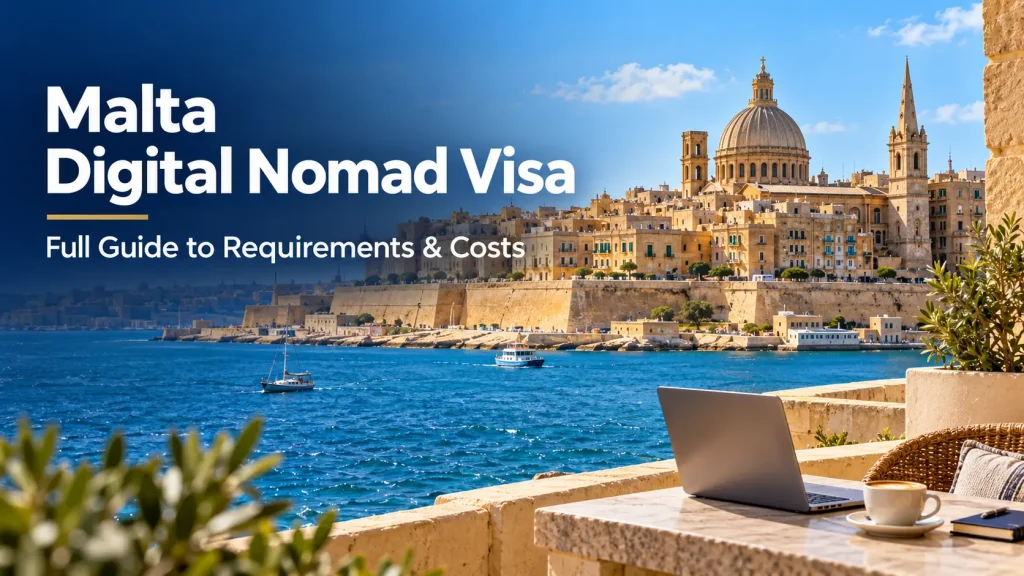
Malta has become an appealing Mediterranean base for professionals who want to work remotely while enjoying historic cities, warm weather, coastal scenery, and easy access to other European destinations. The program commonly called the Malta digital nomad visa is officially known as the Malta Nomad Residence Permit, and it is designed for eligible non-EU, non-EEA, and non-Swiss nationals who earn their income from employers, businesses, or clients based outside Malta. Unlike a short holiday, the permit gives qualifying remote workers a structured way to live in Malta while continuing their international work. It can be particularly attractive to freelancers, online business owners, consultants, developers, marketers, writers, and other location-independent professionals. Accommodation is also an important part of planning the move, so this guide covers not only eligibility, costs, taxes, and application steps but also some useful Malta hotel options available through Booking.com and Trip.com. Whether you want to begin with a waterfront hotel in Sliema or stay close to historic Valletta, preparing both your immigration documents and your first accommodation can make the transition much easier.
What Is the Malta Digital Nomad Visa?
Malta Nomad Residence Permit Explained
Although travelers frequently search for the phrase Malta digital nomad visa, the official name of the program is the Nomad Residence Permit. The permit allows eligible third-country nationals to live in Malta while carrying out remote work for organizations or clients located outside the country. Applicants must be able to perform their work independently of location through telecommunications technology. They can qualify by being employed by a foreign employer, conducting business activities for a foreign company in which they are a partner or shareholder, or providing freelance or consulting services to foreign clients under contracts. Someone working for a foreign company but providing services to its Maltese subsidiary does not normally qualify under the program. This distinction is important because the permit is intended to attract people whose economic activity remains internationally based rather than individuals entering Malta’s local employment market. For digital nomads who qualify, the program provides more stability than repeatedly entering Malta as a tourist and also establishes clear requirements concerning income, insurance, accommodation, documentation, and background checks.
Is It an EU Digital Nomad Visa?
People also frequently use the phrase EU digital nomad visa when researching Malta, but there is an important distinction to understand. Malta is a member of the European Union, yet the Malta Nomad Residence Permit is a Maltese national residence program rather than one single visa issued by the European Union to cover every EU member state. Each European country that offers a digital-nomad arrangement can establish its own eligibility conditions, income rules, application fees, taxation system, and renewal requirements. Malta’s program is therefore useful for someone who specifically wants Malta to be their principal base. Holding the permit also does not mean that a person can automatically become a resident of any other EU country under the same conditions. Applicants should consider Malta’s own immigration rules and any separate rules governing travel within the Schengen Area. For travelers comparing an EU digital nomad visa, this is worth remembering: compare national programs rather than expecting a single Europe-wide solution. Malta stands out because English is widely used, the island is relatively compact, accommodation choices are plentiful, and remote workers can choose between historic city life, lively coastal areas, or quieter island surroundings.
Malta Digital Nomad Visa Requirements
Income Requirement Malta Applicants Need to Meet
One of the most important eligibility conditions is the income requirement Malta has established for new Nomad Residence Permit applicants. The current minimum is €42,000 gross per year for applications submitted from April 1, 2024 onward. Earlier applicants who submitted before that date were subject to the previous €32,400 threshold, but someone preparing a new application now should work with the €42,000 requirement. Residency Malta also states that a main applicant must demonstrate a guaranteed source of income at the applicable level for at least five cumulative months from the application date, with applications assessed individually. Applicants should therefore prepare strong financial evidence rather than relying only on an employment letter stating their salary. Depending on employment status, supporting documents can include contracts, company information, freelance agreements, and bank statements showing that income is actually being received. If your income changes from month to month because you are self-employed, organize your records clearly before submitting the application. Meeting the income requirement Malta sets is central to eligibility, so freelancers and entrepreneurs should calculate their gross annual income carefully before paying application fees or making expensive relocation arrangements.
Who Can Qualify for the Malta Nomad Residence Permit?
The Malta nomad residence permit is primarily designed for remote professionals aged 18 or older who are nationals of countries outside the EU, EEA, and Switzerland. Applicants need to fit into one of three main working arrangements. The first is a remote employee who has a contract with an employer registered outside Malta. The second is someone who conducts business activities for a company registered abroad and is a partner or shareholder in that company. The third includes freelancers and consultants who provide contracted services to clients whose permanent establishments are outside Malta. Residency Malta also maintains restrictions affecting nationals of, or applicants with certain close ties to, specified countries, and that list may change, so applicants should always check the current official eligibility page immediately before applying. In addition to demonstrating eligible remote employment, applicants need a valid travel document, appropriate health insurance, suitable accommodation, a police conduct certificate, and successful background verification. Because eligibility is more than simply earning enough money, applicants should review their complete employment arrangement before applying, especially if their company has business operations or a subsidiary in Malta.
Health Insurance, Passport and Accommodation Requirements
Successful applicants must also prepare several practical documents beyond proof of remote income. A valid passport or other accepted travel document is essential, and Residency Malta requires health insurance that meets the program’s conditions. Current guidance for final proof documents states that qualifying health insurance should provide at least €100,000 of coverage for the European Union, including Malta, and the United Kingdom. Applicants should check the latest table of minimum benefits before purchasing a policy because a standard short-term travel insurance plan may not satisfy residence-permit requirements. Accommodation is equally important. Once an applicant reaches the relevant approval stage, proof must be provided for the Malta address that will be connected to the residence process. This can involve qualifying temporary accommodation or a longer-term rental or property arrangement, depending on the circumstances. Because accommodation documents may need dates, the complete residential address, and proof of payment, digital nomads should avoid making an informal booking that cannot produce proper documentation. Choosing a reputable hotel or established accommodation platform can therefore make the arrival stage more organized.
Documents Needed for the Malta Digital Nomad Visa
Preparing Your Application Documents
Good organization can make the Malta digital nomad visa application considerably easier because Residency Malta may need to verify both the applicant’s identity and the legitimacy of their remote work. Applicants should expect to provide application forms together with passport documentation and evidence connected to their employment, freelancing, or business ownership. The official process also calls for information such as bank statements, and supporting work documents must demonstrate that the applicant genuinely receives income from qualifying international sources. A CV and letter explaining the applicant’s circumstances may also form part of the application documentation, depending on the current checklist. Police-conduct documentation is another important requirement because the Agency performs background checks before making a decision. Documents that are incomplete, inconsistent, outdated, or difficult to verify may create delays or generate requests for further information. Before uploading anything, make sure names, dates, company information, bank records, and contract details are consistent. It is also worth keeping digital copies of every submitted document in clearly labeled folders. Because official checklists can change, use the latest version on Residency Malta’s website instead of copying an old application checklist from an unofficial blog.
Malta Digital Nomad Visa Cost
Application and Residence Card Fees
The direct government fees for the Malta digital nomad visa are relatively simple to understand. Residency Malta currently lists a non-refundable €300 application fee per person, which is paid following the relevant application instructions. If approved, there is also a €100 residence-card issuance fee per person payable to Identità. Depending on nationality and entry requirements, additional visa-related charges may also apply. This means applicants should not assume that €400 represents the complete cost of relocating. Health insurance, document certification or translation, police certificates, flights, transportation, temporary accommodation, rental deposits, mobile service, groceries, and coworking expenses can all add significantly to the first-month budget. Families should calculate expenses separately for each person because some official fees are charged per applicant. Remote workers planning their move should also keep an emergency reserve rather than spending their full relocation budget on accommodation. Hotel rates in Malta change considerably according to season, property class, room type, and booking dates, so checking Booking.com or Trip.com shortly before your trip is more useful than relying on a fixed hotel price quoted months earlier.
How Much Should You Budget for Your First Stay?
Accommodation can become one of the largest expenses during the first stage of a Malta relocation, especially if you choose a four- or five-star hotel in Sliema, St. Julian’s, Floriana, or Valletta. However, booking a hotel for your initial period can be worthwhile because it removes the pressure to sign a long lease before seeing neighborhoods in person. A digital nomad can arrive, settle into remote work, explore supermarkets and transport, test commute times to coworking spaces, and compare longer-term apartments without rushing. When calculating a relocation budget, consider the room price together with breakfast, laundry, transportation, workspace availability, and cancellation conditions. A slightly more expensive room with a desk, reliable Wi-Fi, breakfast, and a central location may actually be more practical than a cheaper room that requires daily transport and paid coworking. Booking.com and Trip.com both allow travelers to compare accommodation categories and current availability, making them convenient starting points. Because prices fluctuate, always enter your actual arrival and departure dates rather than basing your budget on a promotional “from” price shown for different dates.
How to Apply for the Malta Digital Nomad Visa
Malta Nomad Residence Permit Application Process
Applications for the Malta nomad residence permit are submitted through Residency Malta’s online application system. Start by confirming that your nationality, employment arrangement, annual gross income, and remote-working situation meet the current rules. Next, collect the required forms, passport records, work evidence, bank statements, and other supporting documents before beginning the online submission. Once the application is checked for completeness, applicants receive instructions regarding the €300 non-refundable administrative fee. Residency Malta states that application processing is expected to take around 30 working days from the issuance of the receipt of funds, although this period does not include time that might be required for a separate visa process. During assessment, the Agency can request additional information, so applicants should check the email address used in their application regularly. If a Letter of Approval in Principle is issued, the applicant then needs to complete the required final proof stage, which can include suitable health insurance and accommodation evidence. After arrival, the residence-card and biometric stages must also be completed according to the instructions provided by the authorities.
Can a Hotel Be Used as Temporary Accommodation?
Booking a Hotel During the Approval Stage
Hotels can play a particularly useful role for applicants who do not want to commit to a Maltese apartment before arriving. Residency Malta’s current FAQ states that, after the relevant approval stage, an applicant choosing temporary accommodation can submit a temporary accommodation booking with a minimum duration of 15 days and a maximum of one month. The booking needs to include the start and end dates and the complete residential address, and applicants must also provide proof of payment. This creates a natural reason to compare established hotel platforms such as Booking.com and Trip.com rather than relying on an informal arrangement that cannot provide clear documentation. However, a hotel reservation should not be treated as automatically acceptable in every situation simply because it appears online; applicants need to ensure that the reservation matches the exact requirements communicated by Residency Malta. Keep your booking confirmation and receipt, and avoid deleting reservation emails until your residence process is completed. After settling in, you can explore longer-term accommodation if needed. This approach can be particularly comfortable for first-time visitors who are still deciding between Valletta, Sliema, St. Julian’s, Gżira, or quieter parts of Malta.
Best Areas to Stay in Malta for Digital Nomads
Valletta, Sliema, St. Julian’s and Gżira
The right neighborhood can have a major effect on your digital-nomad experience. Valletta is ideal for travelers who enjoy historic streets, cultural attractions, restaurants, and an atmospheric city setting. Its compact layout makes it appealing for people who prefer to finish work and explore on foot. Sliema offers a different experience, with a waterfront promenade, extensive shopping and dining choices, buses, and ferry connections toward Valletta. For many first-time remote workers, Sliema provides a useful balance between everyday convenience and holiday atmosphere. St. Julian’s is better suited to people who enjoy restaurants, nightlife, social activity, and modern hotels, although some parts can feel busy. Gżira is close to Sliema and can be practical for longer stays when you want access to central areas without necessarily staying directly in the most tourist-oriented streets. Digital nomads seeking a slower environment may also consider Gozo after becoming familiar with Malta. Before choosing a long-term base, spending the first couple of weeks in a hotel allows you to visit several areas personally and decide which neighborhood suits your work schedule and lifestyle.
Best Hotels in Malta for Digital Nomads
AX The Palace Malta – A Comfortable Sliema Base
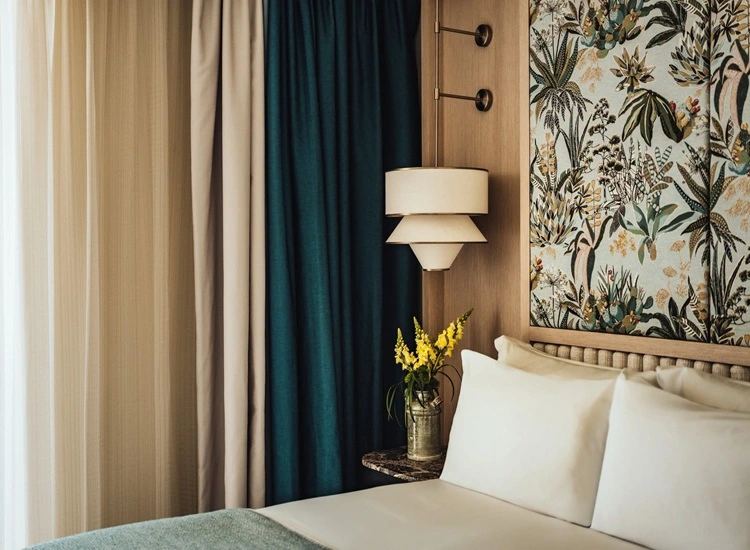
AX The Palace Malta is one of the stronger choices for remote professionals who want an upscale stay in central Sliema. Booking.com currently lists the five-star property with free Wi-Fi throughout the rooms and public areas, a location close to Sliema’s bus terminus and Valletta ferry, two swimming pools, a fitness center, restaurants, and spa facilities. These features can be particularly useful when your visit combines normal working hours with a longer Malta stay, because you have places to relax without traveling far after finishing work. Sliema also provides easy access to restaurants, shopping, waterfront walks, and transport connections, making the hotel convenient for first-time visitors who have not yet decided where to rent an apartment. Trip.com also carries AX The Palace, so travelers can compare the same hotel across platforms before booking. Availability, cancellation rules, room types, and rates change with the travel dates, so check the current terms rather than relying on a quoted price.
Check AX The Palace on Booking.com
Check AX The Palace on Trip.com
The Phoenicia Malta – Luxury Near Valletta
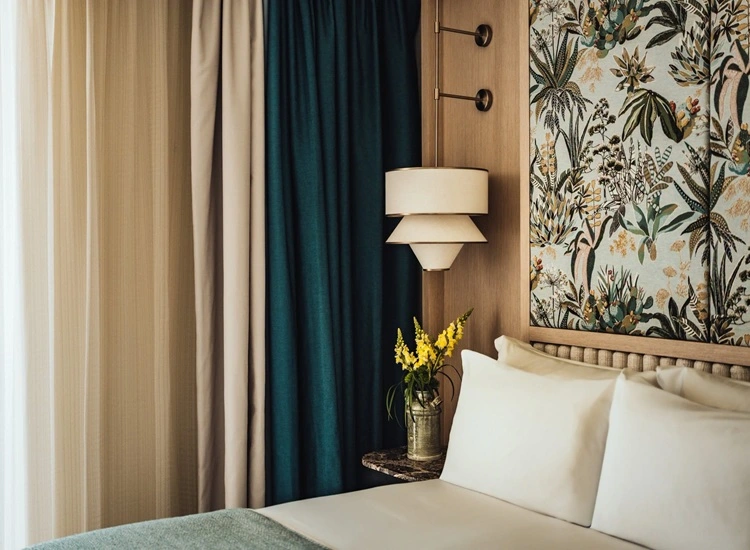
The Phoenicia Malta is particularly attractive for digital nomads who want a premium hotel beside Malta’s historic capital. Located in Floriana at the entrance to Valletta, the hotel gives guests convenient access to the capital while offering a more resort-like environment than many smaller city properties. Booking.com currently highlights free Wi-Fi, spa and fitness facilities, indoor and outdoor pools, restaurants, and a very highly rated location. For a remote professional, the main advantage is the combination of central sightseeing access and the comfort expected from an established luxury property. After working during the day, you can walk into Valletta for restaurants, cultural attractions, or views around the Grand Harbour without planning a complicated journey. This will normally be a higher-end option, so it is better suited to travelers with a comfortable accommodation budget or those who want a premium first week or two before moving into a rental. Hotel rates can rise sharply on popular dates, so compare your exact travel period before deciding.
See The Phoenicia Malta on Booking.com
Hyatt Regency Malta – Good for Work and St. Julian’s Life
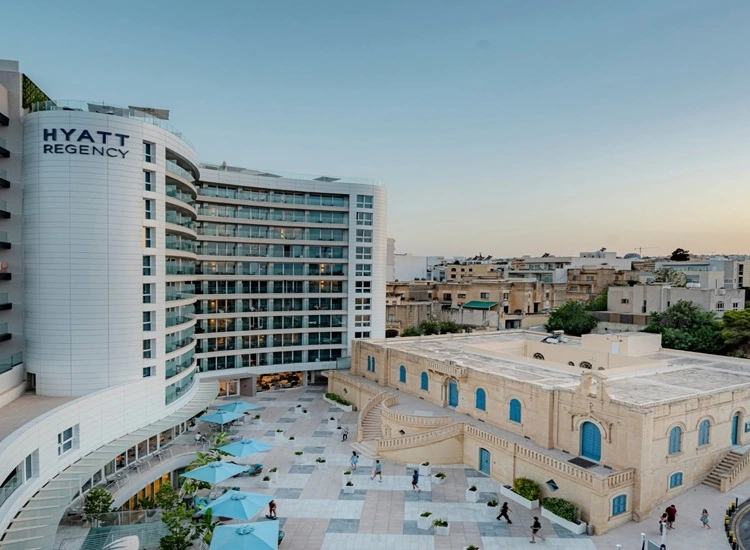
Hyatt Regency Malta provides another attractive option, especially for travelers who want to experience St. Julian’s. Booking.com currently lists the property with free Wi-Fi, fitness and wellness facilities, swimming pools, several dining options, and a central St. Julian’s location. This makes it suitable for digital nomads who want a professional hotel environment during working hours but prefer to be close to Malta’s more active dining and entertainment scene after finishing for the day. St. Julian’s can work particularly well for solo travelers who value social opportunities, although light sleepers may want to check the exact room location and surrounding streets before booking because different sections of the area have very different atmospheres. A hotel of this standard can also be useful when your remote job requires video meetings, formal calls, or a comfortable base from which to organize your residence formalities. Before reserving, compare room types carefully and check whether breakfast, cancellation flexibility, and other services are included in the rate you select.
See Hyatt Regency Malta on Booking.com
Sliema Marina Hotel – Convenient Waterfront Location
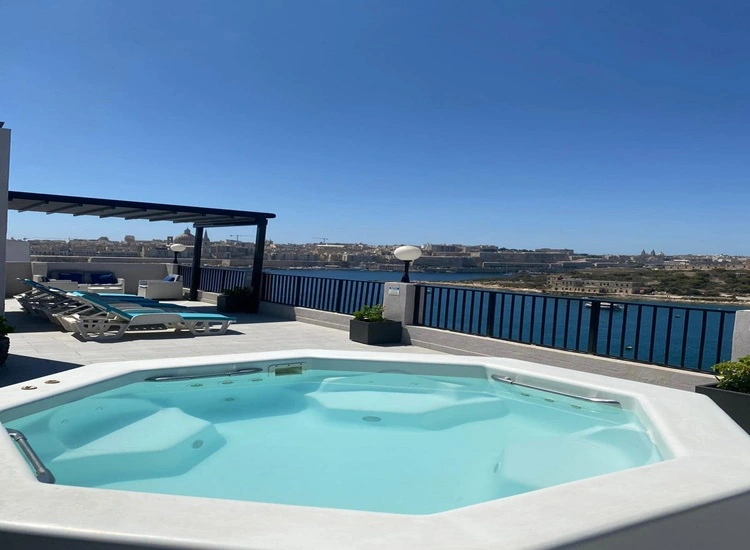
Sliema Marina Hotel can be appealing to travelers who care more about location and everyday convenience than luxury facilities. Booking.com lists the hotel directly on Sliema’s seafront, just a short distance from the bus terminus and ferry services to Valletta. Rooms include free Wi-Fi and desks, two features that immediately make the property relevant for remote workers who expect to spend at least part of the day on a laptop. The surrounding area also contains many restaurants, shops, and services, meaning a digital nomad can handle ordinary daily needs without frequently taking taxis. Its waterfront position is another advantage if you like taking a walk after work or want quick access to transport for sightseeing on weekends. Before booking a long stay, look carefully at individual room categories because views, size, facilities, and noise levels can vary. It can be especially useful as an arrival hotel while you explore Sliema and nearby Gżira before committing to long-term accommodation.
See Sliema Marina Hotel on Booking.com
How to Choose a Digital-Nomad-Friendly Hotel in Malta
What Remote Workers Should Look for Before Booking
A beautiful sea view is a nice bonus, but digital nomads should choose hotels according to their working needs first. Reliable Wi-Fi is essential, so review recent guest comments instead of simply assuming that a hotel advertising free internet will provide the speed you need for video calls or large file uploads. A proper desk and comfortable chair can make a major difference during a two- or three-week stay. Travelers with meetings should also look for quiet rooms, business facilities, lobby areas suitable for occasional work, and nearby coworking spaces as backup options. Laundry services are useful for longer stays, while breakfast can save time before early meetings. Location matters as well: a hotel near buses or the Sliema–Valletta ferry can reduce your dependence on taxis. Flexible cancellation is especially valuable when accommodation is connected to an immigration process because travel dates can change. When using Booking.com or Trip.com, compare the complete booking conditions and not only the headline nightly rate. For a Malta digital nomad visa stay, accommodation should support both your application logistics and your normal professional routine.
you might interested: Fastest Turnaround for a Spain Digital Nomad Visa From the USA
Malta Tax Residency for Digital Nomads
Understanding Malta Tax Residency and the 10% Nomad Tax Rules
Malta tax residency deserves careful attention because immigration permission and taxation are related but not identical concepts. Malta has specific Nomad Residence Permit income-tax rules covering qualifying “authorised work.” Malta Tax and Customs Administration guidance published in 2026 confirms that eligible permit holders who fall within those rules can be subject to a 10% tax rate on income derived from authorised work, subject to the applicable conditions and double-taxation relief. Authorised work generally refers to qualifying remote employment for a non-Maltese employer or qualifying remote services provided to non-Maltese clients. Other income can be treated differently. Importantly, Residency Malta explicitly warns that simply holding a Nomad Residence Permit does not automatically mean that every permit holder qualifies for the special tax treatment. Your individual Malta tax residency, the source and nature of your income, tax obligations in another country, treaty provisions, and the length and circumstances of your stay can all influence the final position. Therefore, someone planning a multi-year Malta stay should obtain qualified tax advice rather than relying on a simplified social-media statement claiming that every digital nomad automatically pays the same rate.
Why Immigration Residence and Tax Residence Are Different
A residence permit tells you whether you have authorization to live in Malta under a particular immigration framework, while tax residence determines how tax laws apply to your circumstances. These concepts can overlap, but they should not be treated as interchangeable. A person can hold the Malta nomad residence permit and still need to consider tax rules in another jurisdiction because of citizenship, existing tax residence, business interests, property, employment arrangements, or other connections. Malta’s official Nomad Residence Permit site specifically recommends obtaining independent advice regarding both Maltese and foreign tax obligations. The relevant legislation establishes a 10% rate for qualifying authorised work when the conditions of the special rules are satisfied, but non-qualifying income can fall under other provisions. This is particularly important for freelancers who receive several types of income, entrepreneurs who take salaries and dividends, or remote workers who continue to maintain significant ties with their home country. For blog readers researching Malta tax residency, the safest approach is to treat the immigration application and tax planning as two connected but separate pieces of the relocation process. (
How Long Does the Malta Nomad Residence Permit Last?
Renewal and Maximum Stay
The initial Malta nomad residence permit is issued for one year, but eligible holders may be able to renew it three times, allowing a total maximum stay of four years at the discretion of Residency Malta. Renewal is not automatic. Applicants must continue satisfying the program requirements and should submit their renewal application approximately two to three months before their existing permit expires. The current rules also require evidence that the permit holder has actually spent a cumulative period of at least five months in Malta during the previous twelve months, with bank transactions in Malta serving as part of the required evidence. This requirement is important for digital nomads who intend to travel extensively while holding the permit because treating Malta only as a paperwork base without sufficient presence may cause problems at renewal. Second and third renewals can also involve additional tax-compliance declarations. If your long-term goal is to use Malta as your main European remote-working base, keep accommodation, banking, tax, insurance, and residence records organized from your first year rather than trying to reconstruct everything just before renewal.
Can You Bring Your Family to Malta?
Malta Digital Nomad Visa for Couples and Children
The program can also work for some remote professionals relocating with their families rather than traveling alone. Residency Malta currently allows the main applicant to include eligible family members in the initial application. These may include a spouse, qualifying partners under the applicable rules, minor children, and certain dependent adult children. Documentation becomes more extensive when dependants are involved, particularly when custody, parental consent, relationships, accommodation size, insurance, and financial support need to be demonstrated. Families should also calculate their relocation budget more carefully because the €300 application fee and €100 residence-card fee are charged per person, and appropriate health-insurance coverage is required for relevant applicants. Hotel selection can also be different for families. Instead of choosing purely for nightlife or coworking access, look for larger rooms, quieter areas, breakfast options, pools, laundry facilities, supermarkets nearby, and convenient transportation. A family may prefer Sliema for convenience or Floriana and the Valletta area for sightseeing, while others may eventually move to a quieter residential neighborhood after spending their first weeks in temporary accommodation.
Best Time to Move to Malta as a Digital Nomad
Choosing Your Arrival Season
Malta can work as a remote-working destination throughout the year, but the experience changes significantly between seasons. Summer attracts many leisure travelers, bringing energetic beach life and long sunny days but also greater tourism demand and potentially higher accommodation costs. Spring and autumn can be especially attractive for digital nomads because the weather is generally suitable for exploring while the islands may feel less intense than during peak summer. Winter offers a different experience, with a calmer atmosphere that can suit remote workers focused on longer projects rather than beach tourism. Your ideal arrival period should also consider your visa timeline, work commitments, and hotel budget rather than weather alone. If your application approval arrives close to a busy travel period, compare hotels immediately but pay attention to cancellation policies in case your schedule changes. Staying in Sliema, St. Julian’s, or near Valletta during your first weeks makes it easier to explore several parts of the island before selecting a long-term home. For remote workers, the best Malta season is ultimately the one that balances accommodation costs, preferred lifestyle, and professional schedule.
Malta Digital Nomad Visa FAQs
What Is the Minimum Income for the Malta Digital Nomad Visa?
For new applications, the current annual income requirement Malta applies at €42,000 gross per year. This threshold has applied to new applicants submitting from April 1, 2024 onward. It is important to focus on gross income rather than assuming that savings alone will satisfy the requirement. Applicants also need evidence that their earnings come from an eligible remote-working arrangement. Residency Malta recognizes qualifying foreign employment, business activities involving a foreign registered company in which the applicant is a partner or shareholder, and freelance or consulting contracts with foreign clients. The Agency can examine applications individually and request additional proof where necessary. If you are a freelancer with variable monthly revenue, organize your bank statements, invoices, and contracts so that the relationship between your work and incoming payments is easy to understand. Meeting the income threshold does not replace the other requirements; applicants still need acceptable documentation, health insurance, accommodation, police-conduct records, and successful background checks. Always verify the current threshold immediately before applying because immigration rules may change after this article is published.
How Long Does the Malta Digital Nomad Visa Take?
Residency Malta currently states that processing is expected to take approximately 30 working days after the Finance Department issues the receipt of funds, assuming the application proceeds normally. This processing estimate does not include additional time that may be required for visa issuance, and questions or missing documents can extend the overall timeline. Applicants should therefore avoid booking expensive non-refundable travel immediately after submitting their application on the assumption that approval will arrive on an exact date. A better strategy is to organize your documents carefully, respond quickly if Residency Malta requests additional information, and make accommodation bookings at the stage required by your application instructions. Once the relevant approval is received, applicants using qualifying temporary accommodation can submit a booking covering at least 15 days and no more than one month together with the necessary proof of payment and address information. Flexible booking conditions can therefore be useful. If you are considering hotels from Booking.com or Trip.com, review the cancellation terms before paying, especially when your arrival depends on immigration processing. (Nomad Residence Permit)
Is the Malta Digital Nomad Visa Worth It?
For the right remote professional, the Malta digital nomad visa can offer an appealing combination of Mediterranean lifestyle and structured legal residence. Malta is especially attractive to people who value an English-speaking environment, compact distances, coastal living, historic cities, and the possibility of using an EU member state as their main remote-work base. However, the program will not suit everyone. The €42,000 gross annual income requirement means some early-stage freelancers will not qualify, while applicants must also budget for official fees, insurance, housing, and day-to-day costs. Anyone focused primarily on minimizing expenses should compare Malta with other national programs marketed under the broader EU digital nomad visa category. Tax planning is another important consideration because Malta tax residency and eligibility for the special nomad tax rules depend on personal circumstances rather than the residence card alone. If the program fits your finances and work arrangement, beginning with a hotel in Sliema, St. Julian’s, or near Valletta can give you time to understand the islands before choosing a longer-term home.
Final Thoughts
The Malta Digital Nomad Visa, officially the Malta Nomad Residence Permit, gives qualifying remote professionals an opportunity to turn Malta from a short Mediterranean holiday into a longer working base. The most important preparation points are straightforward: confirm that your remote work qualifies, make sure you meet the current €42,000 income requirement Malta applies to new applicants, prepare complete financial and employment evidence, obtain the appropriate insurance, and understand your accommodation obligations before traveling. You should also research Malta tax residency separately because immigration status does not automatically determine every tax consequence. Once those practical issues are organized, choosing where to stay becomes the enjoyable part. Sliema offers excellent everyday convenience, St. Julian’s suits travelers seeking a more social atmosphere, and Valletta or nearby Floriana is ideal for culture and historic surroundings. Hotels such as AX The Palace, The Phoenicia Malta, Hyatt Regency Malta, and Sliema Marina Hotel provide several accommodation styles that can be compared through Booking.com or Trip.com before arrival. Always check current prices, cancellation terms, and the official Residency Malta rules immediately before submitting your application or paying for accommodation.