
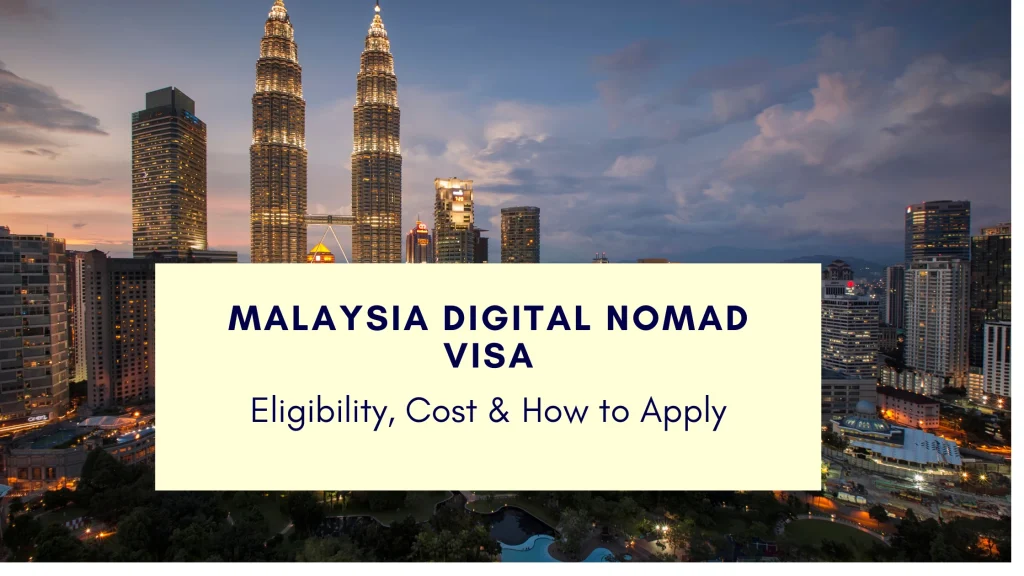
Malaysia has become an increasingly attractive destination for remote professionals who want modern infrastructure, diverse food, warm weather, international air connections, and a wide choice of apartments and hotels without giving up the advantages of living in a major Asian economy. Unlike countries where “digital nomad visa” is only an informal name for another residence permit, Malaysia has a dedicated program. The Malaysia digital nomad visa is officially known as the DE Rantau Nomad Pass, a Professional Visit Pass created for qualified foreign freelancers, independent contractors, and remote employees. Current MDEC rules allow an initial stay of between three and twelve months, with one additional renewal of up to twelve months, creating a maximum potential stay of 24 months. The program now covers both digital/technology professionals and a defined group of non-tech professionals, although different minimum-income thresholds apply. For anyone considering the Malaysia DE Rantau pass, visa planning should go together with accommodation planning. A comfortable serviced apartment or work-friendly hotel with reliable Wi-Fi, a real desk, kitchen access, laundry, and good transportation can make the first weeks in Malaysia considerably easier.
What Is the Malaysia Digital Nomad Visa?
Malaysia DE Rantau Pass Explained
The Malaysia DE Rantau pass is officially classified as a Professional Visit Pass, or Pas Lawatan Ikhtisas, specifically designed to allow qualified foreign digital nomads to travel and work remotely from Malaysia. MDEC’s current 2026 FAQ describes two broad professional categories. The first covers technology and digital talent, including areas such as software engineering, UX and UI, cloud technology, cybersecurity, blockchain, artificial intelligence, machine learning, data-related work, digital marketing, digital creative content, and digital content development. The second category covers selected non-tech professions, including founders and CEOs, operations executives, business-development and marketing managers, finance and accounting professionals, sales, customer success, human resources, legal and public-policy professionals, consultants, communications specialists, technical writers, tax specialists, production managers, and supply-chain managers. This means the remote work permit Malaysia offers through DE Rantau is no longer limited to programmers or technology workers. However, applicants still need to fit the professional definitions and prove that their work arrangement satisfies MDEC’s requirements. The program is designed for genuine remote professionals rather than anyone who simply owns a laptop and wants to stay longer in Malaysia.
How Long Can You Stay?
Current MDEC rules make the DE Rantau Nomad Pass suitable for people who want a medium-term remote-work base rather than permanent immigration. The initial Professional Visit Pass can be issued for three to twelve months, and eligible holders can renew it once for up to another twelve months. That means the maximum possible stay under the normal DE Rantau framework is 24 months. MDEC also states that the pass permits multiple entries, which is particularly useful for remote workers who may need to return home for meetings, visit clients, or travel around Asia during their Malaysian stay. Renewal can be submitted up to three months before the existing pass expires, and MDEC currently estimates another six to eight weeks for a completed renewal application. The program should therefore be viewed as a flexible temporary base rather than a direct route to permanent residence. Another important geographic limitation appears in the current FAQ: the standard DE Rantau Nomad Pass facilitates residence in Peninsular Malaysia and the Federal Territory of Labuan. Travelers may still visit Sabah or Sarawak as tourists, while Sarawak operates a separate DE Rantau arrangement with its own rules and fees.
Visa Eligibility Malaysia: Who Can Apply?
Eligibility for Tech and Digital Professionals
For technology and digital professionals, visa eligibility Malaysia under DE Rantau is relatively broad. MDEC specifically identifies digital freelancers, independent contractors, and remote employees working in areas including software development, cloud services, cybersecurity, blockchain, artificial intelligence, machine learning, data, UX/UI, digital marketing, digital content, and creative digital work. The applicant must be older than 18 and meet the applicable income requirement. Remote employees must work for a foreign-based company that is not registered in Malaysia and must genuinely be able to perform their job remotely without being tied to a physical office. MDEC’s current requirements go further than simply asking for an employment letter: the employment contract should identify the remote-work arrangement, job responsibilities, salary, employer details, and contract duration. The employment relationship must also have begun at least three months before the application is submitted. Freelancers have a slightly different route because MDEC accepts client contracts and freelance agreements, including arrangements with foreign clients and, under current rules, potentially Malaysian clients. Digital marketers should pay particular attention to the latest document checklist because MDEC currently requires a marketing portfolio or performance report for applicants filing under a digital-marketing profession.
Eligibility for Non-Tech Professionals
Malaysia expanded the program beyond the original IT and digital categories, making the Malaysia digital nomad visa relevant to a much larger professional audience. The current list includes founders, managing directors, presidents, chief operating officers, business-development and growth managers, marketing managers, CFOs, finance managers, accountants, sales managers, customer-success professionals, HR managers, legal counsel, public-policy professionals, consultants, communications and PR managers, administrators, technical writers, tax specialists, production managers, and supply-chain managers, as well as related equivalent positions. The important difference is financial: the required income for non-tech professionals is substantially higher than for tech and digital applicants. Someone working remotely as an accountant or consultant should therefore not rely on an older article saying every applicant needs only US$24,000 annually. That lower threshold applies to the tech/digital route. The expanded non-tech route currently requires at least US$60,000 per year. Before paying the application fee, applicants with unusual job titles should compare their actual duties with the occupations listed in MDEC’s latest FAQ instead of assuming a broadly similar title will automatically qualify.
Malaysia Digital Nomad Visa Income Requirement
Tech vs. Non-Tech Income Thresholds
The current income rules are one of the most important details in the Malaysia digital nomad visa application. According to MDEC’s current FAQ, applicants categorized as tech or digital talent must demonstrate a minimum annual income of US$24,000, while eligible non-tech professionals must demonstrate at least US$60,000 per year. Malaysia’s Ministry of Digital describes the non-tech threshold as US$60,000 annually, equivalent to US$5,000 per month. Remote employees should be prepared to prove that income through their employment contract, recent payslips, and matching bank deposits. MDEC’s current FAQ requires the most recent three months of payslips and three months of bank statements for remote employees, with the bank transactions corresponding to the submitted salary evidence. Freelancers are expected to provide contracts or freelance agreements, recent invoices, evidence showing how payments were received, and bank statements demonstrating consistent income above the required threshold. This is an area where consistency matters. Applicant name, contract values, invoices, salary amounts, and actual bank deposits should tell the same financial story. An application that technically reaches the threshold but contains unexplained inconsistencies may face additional questions or rejection.
Documents Required for the Malaysia DE Rantau Pass
Remote Employees Need a Detailed Evidence Package
MDEC’s latest published requirements show that the application has become fairly structured. Remote employees should provide all passport pages, with the passport having at least six empty pages and more than fourteen months of remaining validity. Applicants also need a current CV and a signed employment contract confirming the remote arrangement, job title, responsibilities, salary, contract duration, and details of the foreign employer. The contract should preferably remain valid for at least six months from the application date, and the job must have started at least three months before submission. Recent payslips and matching bank statements are required, while an employer-confirmation letter is described as optional but strongly recommended. The current MDEC document also lists a good-conduct letter, education evidence, personal-bond documentation, and other supporting items. Documents must be in English or accompanied by certified English translations, and MDEC specifies PDF format for submissions. Freelancers follow a related but different evidence route based on contracts, invoices, payment evidence, bank statements, and proof of professional activity. Because these requirements can change, applicants should download the newest MDEC checklist immediately before preparing their file rather than copying a checklist from an older blog post.
How to Apply for the Malaysia Digital Nomad Visa
Step-by-Step Application Process
The Malaysia digital nomad visa application is completed online through MDEC. Start by confirming whether your occupation falls under the tech/digital or non-tech category and whether your verified annual income reaches the relevant threshold. Next, organize your employment or freelance documentation, passport, financial evidence, and supporting documents so that names, dates, and amounts are consistent. The application is then submitted through MDEC’s online DE Rantau system, where supporting documents are uploaded and the application fee is paid. According to the current MDEC FAQ, a complete application is generally processed within six to eight weeks, although additional document requests can extend the timeline. Approval remains valid for six months and cannot be extended, so successful applicants need to complete the endorsement process before it expires. If an applicant is already in Malaysia as a tourist when approval is granted, current rules require the person to leave and re-enter using the appropriate entry method before the DE Rantau e-Pass can be endorsed. Another important 2026 change is that MDEC states no appeals are accepted for rejected applications from August 1, 2026; applicants may submit a new application later once they meet the requirements.
Malaysia DE Rantau Pass Cost
Application, Immigration and Bond Fees
The remote work permit Malaysia offers through DE Rantau is relatively affordable compared with many residence programs, although several separate charges need to be considered. MDEC’s current 2026 FAQ lists a RM1,080 non-refundable processing fee for the main applicant, inclusive of 8% SST, and RM540 for each dependent. The fee remains non-refundable if the applicant is rejected, cancels, or withdraws. During endorsement, an additional immigration-pass charge applies: RM90 for every three months or RM360 for a full year. A multiple-entry visa charge can also apply depending on nationality. When MDEC acts as the applicant’s sponsoring organization, a refundable personal or security bond is required, with the amount depending on nationality. The published schedule ranges from several hundred ringgit to RM2,000 for some nationalities. These figures do not represent the complete cost of relocating. Travelers should additionally budget for document preparation, good-conduct certificates, translations where necessary, insurance or other endorsement documents where requested, airfare, airport transport, temporary accommodation, coworking, and eventually an apartment deposit. Hotel expenses may actually be the largest initial cost if a traveler books several weeks before finding longer-term housing.
| Fee | Current published amount |
| Main applicant processing | RM1,080 |
| Each dependent | RM540 |
| Immigration pass – 3 months | RM90 |
| Immigration pass – 1 year | RM360 |
| Multiple-entry visa | Varies by nationality |
| Personal/security bond | Varies by nationality |
Can You Bring Your Family?
Dependants and Family Accommodation
The Malaysia DE Rantau pass is relatively family-friendly because eligible main applicants can include immediate family members. MDEC currently permits a spouse or common-law partner, children or stepchildren under eighteen, a disabled child without an age limit when appropriately verified, and the main applicant’s parents. However, a spouse holding dependant status is not permitted to work in Malaysia under that dependant pass. Children who want to attend school need to follow the relevant Student Pass requirements, although MDEC says a Student Pass is not required for a dependant who is being homeschooled. Families should also think differently about accommodation. A studio hotel room may be perfectly comfortable for one freelancer but become impractical for two adults and children over several months. Serviced apartments with separate bedrooms, kitchens, washing machines, swimming pools, grocery stores nearby, and access to MRT or LRT stations often provide better value for families. When comparing Booking.com or Trip.com, search using the actual number of adults and children because room eligibility and pricing can change substantially. A slightly more expensive two-bedroom apartment can also reduce food and laundry expenses enough to make the overall monthly budget more manageable.
Cost of Living Malaysia for Digital Nomads
Kuala Lumpur Cost of Living
The cost of living Malaysia offers is one reason Kuala Lumpur attracts remote professionals, but the city should not automatically be described as “cheap.” Lifestyle and neighborhood make an enormous difference. Numbeo’s June 2026 crowdsourced data placed an average one-bedroom apartment in central Kuala Lumpur at approximately RM2,600 per month, compared with about RM1,544 outside the city center. An inexpensive restaurant meal averaged around RM20. These figures are useful as broad benchmarks but should not be confused with guaranteed digital-nomad prices. Furnished apartments rented for one or two months can cost much more than ordinary twelve-month leases, especially in areas such as KLCC and Bukit Bintang. Digital nomads should also include electricity—particularly heavy air-conditioning use—mobile service, coworking, transportation, insurance, entertainment, and short-term hotel costs. One advantage of Kuala Lumpur is the huge serviced-apartment market. A traveler can book a property containing a kitchen, laundry facilities, pool, and gym instead of paying separately for each service. This is why the accommodation search should focus on total monthly lifestyle cost rather than simply identifying the cheapest nightly rate. (Numbeo)
Penang Cost of Living
Penang can provide a slower and, depending on accommodation choice, less expensive alternative to Kuala Lumpur. Numbeo’s May 2026 crowdsourced data reported an average one-bedroom city-center apartment at roughly RM1,648 per month, while a similar apartment outside the center averaged around RM939. An inexpensive restaurant meal was around RM15. Penang’s food scene is a major attraction for longer stays, and areas around George Town and Tanjung Tokong provide a mix of local restaurants, cafés, condominiums, malls, and serviced apartments. Remote workers should still remember that Penang’s transportation environment is different from Kuala Lumpur’s extensive rail network; choosing accommodation close to groceries, restaurants, or the places you intend to work can therefore matter more. Short-term furnished apartments will not necessarily match Numbeo’s ordinary residential-rent averages, so Booking.com and Trip.com searches using exact travel dates provide a better picture for someone arriving for the first month. Overall, Penang is particularly attractive to digital nomads who want a combination of food, culture, urban convenience, and a slightly less intense pace than Kuala Lumpur. (Numbeo)
Best Places in Malaysia for Digital Nomads
Kuala Lumpur for Big-City Remote Work
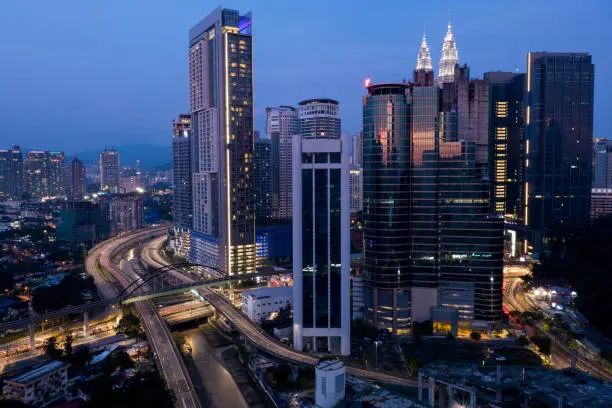
Kuala Lumpur is the easiest starting point for many DE Rantau applicants because it combines international flights, modern business districts, shopping malls, restaurants, public transportation, coworking spaces, and one of Malaysia’s deepest accommodation markets. Areas around KLCC suit travelers who want to be close to the central business district and major attractions, while Bukit Bintang is useful for restaurants, shopping, and entertainment. Bangsar and KL Eco City can appeal to people looking for a more residential or longer-stay routine. Kuala Lumpur also gives newly arrived digital nomads a huge choice between traditional hotels, branded serviced residences, private apartments, and coworking-oriented accommodation. Instead of signing a long rental contract immediately, it can be sensible to stay in a serviced apartment for the first two or three weeks and explore neighborhoods during evenings and weekends. A hotel with kitchen and laundry facilities is especially helpful during this stage because it allows normal everyday living without requiring the commitment of a residential lease. The city’s scale means location matters: being near an MRT or LRT connection can often provide more everyday value than choosing a cheaper property far from public transportation.
Penang, Langkawi, Melaka and Other Remote-Work Bases
Penang offers one of the strongest alternatives to the capital, particularly for remote workers interested in food, culture, heritage, and coastal living. Langkawi offers a more leisure-oriented island environment and can work well for travelers with flexible schedules who prioritize beaches and outdoor activities. Melaka provides a smaller historic-city experience that can suit shorter workations, while MDEC has also promoted Terengganu within its wider DE Rantau destination ecosystem. MDEC reported more than 2,000 certified DE Rantau Hubs in its program expansion, with hub certification focusing on elements such as strategic locations, broadband connectivity, and work-friendly amenities. One important distinction is Sarawak: it now has its own DE Rantau Sarawak program and separate administrative framework. Travelers who want to base themselves in Kuching or elsewhere in Sarawak should therefore follow the Sarawak-specific rules rather than assuming the standard Peninsular Malaysia pass works identically there. Malaysia’s variety is one of its strongest selling points: a DE Rantau holder can choose a dense modern capital, historic food city, beach destination, or quieter coastal environment depending on how they prefer to work. (MDEC)
Best Hotels and Serviced Apartments for Digital Nomads in Kuala Lumpur
These Kuala Lumpur options represent several different remote-work styles, from coworking-oriented hotels to full serviced apartments.
Komune Living & Wellness — Best for Coworking and Wellness
Komune Living & Wellness Web Address: 21, Jalan Tasik Permaisuri 2, Bandar Tun Razak, 56000 Kuala Lumpur, Wilayah Persekutuan Kuala Lumpur, Malaysia Phone: +60321066666
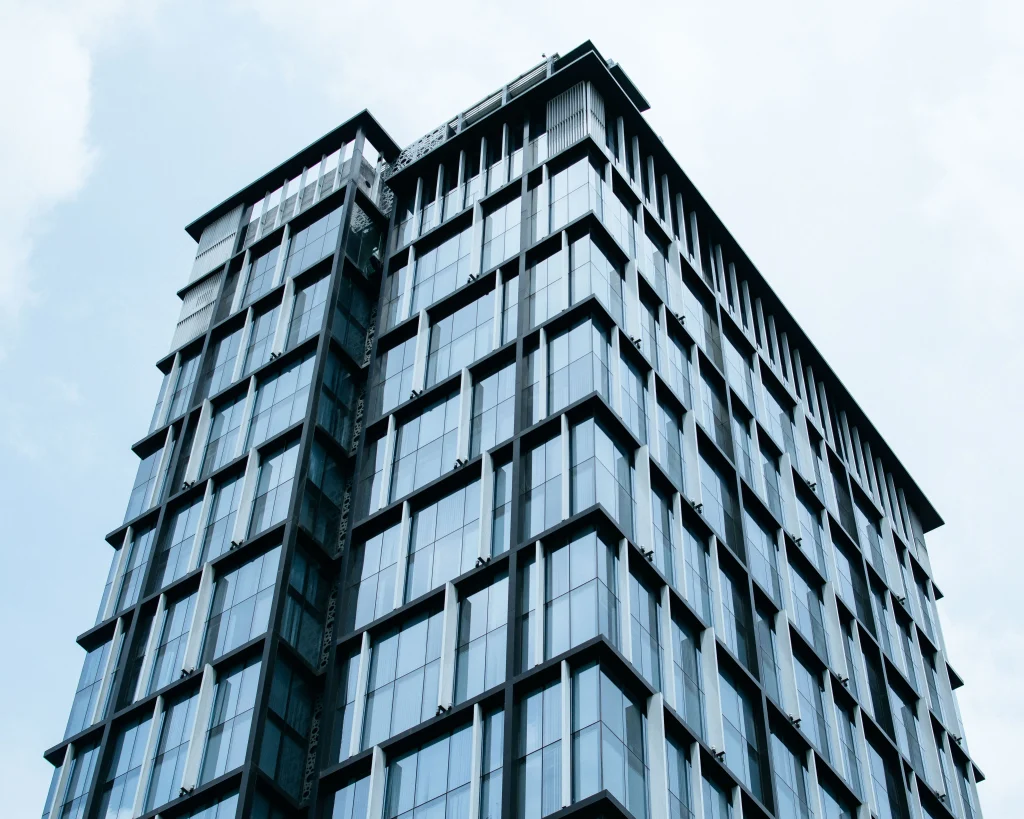
For remote professionals who want dedicated work facilities without renting a separate office, Komune Living & Wellness is one of the most relevant Kuala Lumpur options. Trip.com currently lists coworking spaces, conference rooms, free Wi-Fi in public areas, a laundry room, gym, café, restaurant, and outdoor swimming pool. Rooms also include desks, making the property particularly suitable for someone whose weekday routine involves several hours on a laptop. Its wellness emphasis provides another benefit during longer stays because a digital nomad can work, exercise, eat, and handle laundry without organizing several external memberships or services. The trade-off is location: it sits outside the central KLCC/Bukit Bintang core, so travelers who expect to spend most evenings downtown should consider transportation time alongside the room price. For a remote professional who values a quieter work-focused base and on-site amenities, however, the combination can be excellent. Current Trip.com listings and recent reviews also confirm self-service laundry and substantial fitness facilities, two amenities that become far more valuable after the first week of a stay. (Trip.com)
Check Komune Living & Wellness on Trip.com
Tribeca Serviced Hotel by Millennium — Best for Bukit Bintang
Tribeca Serviced Hotel by Millennium Web Address: 215, Jln Imbi, Bukit Bintang, 55100 Kuala Lumpur, Wilayah Persekutuan Kuala Lumpur, Malaysia Phone: +60327272288
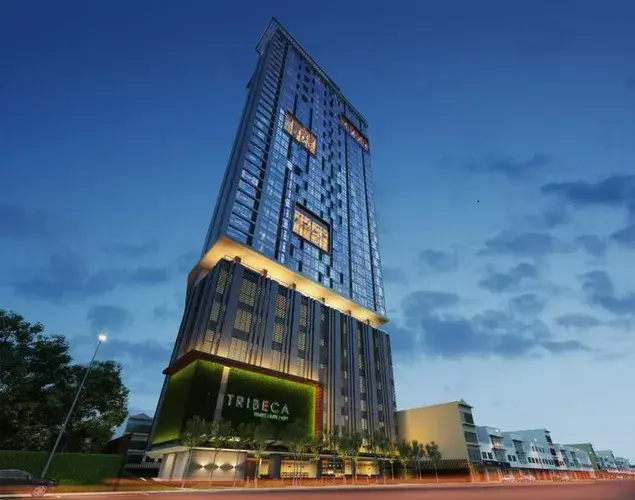
Tribeca Serviced Hotel by Millennium is particularly appealing to digital nomads who want a central location and apartment-style facilities. Trip.com places it on Jalan Imbi close to Bukit Bintang, TRX, Pavilion, restaurants, and shopping. Current 2026 guest information for some larger suite types highlights full kitchens and in-unit washers and dryers, which can make a multi-week stay much easier than living from a conventional hotel room. The property also has swimming and fitness facilities. Location is arguably its greatest advantage: remote workers can finish the workday and reach shopping, food, or entertainment without spending significant time in traffic. However, room configurations differ, so travelers should verify that the exact suite they select includes the kitchen and laundry setup they need. Recent reviews also show variation in guests’ opinions about room condition and housekeeping, which is a good reminder to read the newest reviews before committing to a month-long reservation. For someone prioritizing central city access and apartment-style independence, Tribeca is worth comparing with more premium serviced residences nearby.
View Tribeca Serviced Hotel on Trip.com
Ascott Kuala Lumpur — Best Premium Long-Stay Option Near KLCC
Ascott Kuala Lumpur Web Address: 9, Jalan Pinang, Kuala Lumpur, 50450 Kuala Lumpur, Federal Territory of Kuala Lumpur, Malaysia Phone: +60327186868
Ascott Kuala Lumpur is particularly strong for professionals who want a premium apartment-style base in the heart of the city. Booking.com lists studios and apartments with fully equipped kitchens, dishwashers, microwaves and kitchenware, together with free Wi-Fi, a fitness center, swimming pool, business facilities, and a location within walking distance of KLCC. This combination can work well for consultants, executives, couples, or families who want more living space while remaining close to Kuala Lumpur’s central business district. Trip.com’s recent 2026 reviews also mention the usefulness of full-size refrigerators and on-site laundry facilities. The biggest benefit of a serviced residence like Ascott is that it allows digital nomads to behave more like temporary residents than tourists. Breakfast can be prepared at home, calls can be taken from a larger apartment, and work can be separated more easily from sleep. The main drawback is budget: its central location and branded serviced-residence positioning usually place it above cheaper apartment hotels. For professionals whose priority is comfort, space, and KLCC convenience, that premium may be worthwhile. (Booking.com)
Check Ascott Kuala Lumpur on Booking.com
ViiA Residences Kuala Lumpur — Best for Apartment Independence
ViiA Residences Kuala Lumpur is another strong choice for long-stay travelers because Booking.com currently lists apartments with kitchenettes, free Wi-Fi, work desks, washing machines in relevant units, refrigerators, microwaves, and living areas. Guests also have access to a rooftop swimming pool, sauna, fitness facilities, garden, and on-site dining. The KL Eco City location places the property near Mid Valley Megamall and provides a different experience from staying in the tourist-heavy KLCC core. For a DE Rantau holder who plans to remain several weeks or months, access to a proper kitchen and washing machine can significantly reduce everyday friction. Instead of paying for hotel laundry or eating every meal outside, travelers can maintain a more normal routine. This can be particularly attractive for couples or families, although solo remote workers may also value the extra living space. Room facilities differ by category, so the exact listing should always be checked before booking. Current Booking.com information shows studio and multi-bedroom layouts, making ViiA useful for several different long-stay budgets and group sizes. (Booking.com)
View ViiA Residences on Booking.com
A Penang Option for Longer Remote-Work Stays
118 @ Island Plaza — Apartment-Style Living in Tanjung Tokong
118 @ Island Plaza Web Address: Tanjong Tokong Rd, 10470 George Town, Malaysia
For digital nomads choosing Penang rather than Kuala Lumpur, the 118 Island Plaza complex in Tanjung Tokong is worth exploring because Booking.com currently carries apartment-style accommodation there with facilities useful for remote workers. One current listing shows a fully equipped kitchenette, washing machine, free Wi-Fi, work desk, air conditioning, and indoor swimming pool. Those features can be especially valuable during a multi-week stay because Penang’s lifestyle encourages slower living rather than constantly changing accommodation. Tanjung Tokong also places travelers between central George Town and the northern coastal areas, although anyone without their own transport should investigate bus and ride-hailing convenience before committing. Unlike a branded hotel, individual apartment listings within a complex can differ substantially in furnishing, management quality, internet performance, and housekeeping. That makes recent reviews particularly important. A well-managed apartment at Island Plaza can provide considerably more independence than a normal hotel room, but travelers should verify the exact unit rather than assuming every apartment in the building provides identical services. (Booking.com)
Browse a current 118 Island Plaza listing on Booking.com
Why Serviced Apartments Work So Well for DE Rantau Nomads
Long Stays Need More Than a Bed and Breakfast
A conventional hotel can be excellent for a weekend, but the needs of a Malaysia DE Rantau pass holder change once a trip lasts several weeks or months. Kitchens are the clearest advantage of serviced apartments. Even in a country with affordable local food, preparing breakfast, coffee, and occasional meals at home can reduce expenses and make a working routine easier. Washing machines or convenient self-service laundry prevent the repeated hotel-laundry charges that become frustrating during long stays. Extra storage allows travelers to unpack properly, and separate living areas help create a psychological boundary between working and sleeping. Hotel-style services still matter, which is why branded serviced residences can provide an attractive middle ground: reception assistance, security, housekeeping, pools, gyms, and maintenance remain available without sacrificing home-style facilities. Traditional hotels can still be better for shorter stays or business trips, particularly if breakfast, daily housekeeping, room service, and a central location are priorities. Digital nomads should therefore compare the complete monthly experience rather than deciding based only on nightly rates. A RM20 difference per night can be worthwhile if it eliminates separate coworking, gym, laundry, and restaurant expenses.
What Digital Nomads Should Look for in a Malaysia Hotel
Build Your Booking Around the Working Week
The best remote-work hotel should make Monday through Friday easy, not simply look attractive on vacation photos. Reliable Wi-Fi comes first, but travelers should read recent reviews rather than trusting the phrase “free Wi-Fi.” Look for guests mentioning video calls, work, connection stability, or actual internet speeds. A genuine desk and suitable chair matter if you will work several hours per day, while easily accessible power outlets prevent awkward laptop setups. In Malaysia’s warm climate, good air conditioning is another practical necessity. For stays beyond a week, kitchens, refrigerators, microwaves, washing machines, or reasonably priced laundry become increasingly important. Public transportation also deserves attention in Kuala Lumpur: a serviced apartment close to MRT or LRT access may save significant time and ride-hailing costs. Gyms and pools are useful because they help maintain a routine without purchasing temporary memberships. Finally, consider flexible cancellation. A DE Rantau application normally takes six to eight weeks, and applicants should not create unnecessary financial risk by booking an expensive non-refundable month before travel and endorsement details are certain. Compare the same dates on Booking.com and Trip.com rather than assuming one platform always has the lowest total price.
You might like : Digital Nomad Remote Work Outlook
DE Rantau Hubs and Coworking in Malaysia
Malaysia Is Building an Ecosystem, Not Just Offering a Visa
One feature that makes Malaysia’s digital-nomad strategy different from a simple immigration program is the DE Rantau Hub ecosystem. MDEC has described certified hubs as accommodation and work environments selected partly for strategic location, broadband connectivity, and remote-work-friendly facilities. Its official program announcements have reported more than 2,000 certified hubs across the expanding DE Rantau network. That matters because digital nomads need more than legal permission to remain in a country. They need dependable places to work, accommodation suitable for longer stays, community, transportation, food, connectivity, and access to everyday services. Coworking hotels such as Komune Living & Wellness illustrate how the hotel industry can participate directly in this ecosystem by combining rooms with shared working areas, meeting facilities, gyms, food, and laundry. Other travelers may prefer an independent coworking membership and a private serviced apartment. Neither model is automatically superior. Someone who wants networking might value shared workspaces, while a corporate employee dealing with confidential information may prefer to work privately from an apartment. Malaysia’s large variety of accommodation allows both approaches. (MDEC)
Internet, Mobile Data and Backup Connectivity
Never Depend on One Connection
Malaysia’s major digital-nomad destinations generally provide strong connectivity options, but remote professionals should still plan for failure. Hotel Wi-Fi can slow during busy periods, building maintenance can temporarily interrupt service, and even a highly rated property can experience occasional outages. A local mobile-data plan or eSIM provides a simple backup for important calls. When choosing accommodation, look for recent reviews mentioning stable Wi-Fi and consider contacting the property directly if your job requires large uploads, development environments, or several hours of video meetings every day. Coworking spaces can provide another backup by offering business-grade internet, ergonomic desks, meeting rooms, and a dedicated environment away from the bedroom. The most resilient setup is therefore not necessarily finding one “perfect” connection but having two independent ways to get online. This is particularly important for remote employees because a missed client presentation or team meeting can cost far more than a month of mobile data. Digital nomads should also carry appropriate plug adapters, maintain cloud backups, use multi-factor authentication, and follow employer cybersecurity requirements while accessing corporate systems internationally.
Taxes for DE Rantau Nomads
The Pass Is Not Automatically Tax-Free
Digital nomads should not assume the Malaysia digital nomad visa creates a blanket tax exemption. MDEC’s current 2026 FAQ includes a specific tax section distinguishing between freelancers and foreign remote employees, with treatment depending partly on the source of income and the number of days spent in Malaysia. For foreign remote workers earning outside Malaysia, the FAQ states that tax is not applicable when the stay does not exceed 60 days under the cited exemption, while stays of 61 days or more may become taxable under the relevant provisions and applicable double-tax agreement. Freelancers can face a different treatment. Because tax status can depend on residence days, source of income, treaty provisions, and individual business arrangements, this is one part of the DE Rantau program where professional advice is worthwhile. Someone planning a full twelve-month stay should not rely on a blog headline saying “Malaysia is tax free for digital nomads.” Immigration permission and tax treatment are separate questions. MDEC itself recommends contacting Malaysia’s Inland Revenue Board for detailed tax enquiries, making that the safer source for individual circumstances.
Advantages of the Malaysia Digital Nomad Visa
Why Malaysia Can Be a Strong Remote-Work Base
Malaysia offers a compelling combination of visa structure and everyday lifestyle. The DE Rantau program provides a clearly defined route lasting up to twelve months initially and potentially 24 months with renewal, rather than forcing legitimate remote professionals to depend on repeated tourist entries. Tech and digital workers benefit from a relatively accessible US$24,000 income threshold, while the expansion to selected non-tech professions makes the program useful to managers, consultants, accountants, marketing professionals, and other remote workers who qualify at the higher income level. Kuala Lumpur provides big-city convenience, international flights, public transportation, coworking, malls, and a deep serviced-apartment market. Penang provides a slower lifestyle centered on food, heritage, and coastal living. Langkawi adds an island option, while other DE Rantau destinations broaden the choices further. Families can accompany the main applicant, and multiple entry makes regional travel practical. Malaysia also has abundant accommodation with kitchens, washing machines, pools, and gyms—features that can turn a remote-work stay from an extended vacation into something closer to ordinary daily life. For many nomads, that combination is more valuable than simply choosing the destination with the lowest monthly rent.
Potential Challenges to Consider
DE Rantau Is Flexible, but It Still Has Rules
The biggest challenge is ensuring that the applicant fits the correct professional and income category. A tech professional earning US$30,000 annually may qualify financially, while a non-tech consultant earning the same amount would not meet the current US$60,000 threshold. Application evidence also needs to be consistent, and MDEC now requires an established work history rather than allowing someone who signed a remote contract yesterday to apply immediately. The processing fee is non-refundable, and rejected applications can no longer be appealed under the current rule effective August 2026, making preparation especially important. Climate is another consideration: Malaysia is hot and humid throughout much of the year, so air-conditioning and indoor workspace quality matter. Kuala Lumpur traffic can also make an apparently inexpensive hotel inconvenient if it is far from rail connections or the places you visit frequently. Dependants cannot automatically work, and families considering schooling need separate planning. Finally, remote workers staying for longer periods should investigate Malaysian tax obligations rather than assuming the visa itself determines tax status. These challenges are manageable, but they reward travelers who research carefully before paying for flights or long hotel reservations.
Malaysia Digital Nomad Visa FAQs
Does Malaysia Have an Official Digital Nomad Visa?
Yes. Malaysia operates an official digital-nomad immigration program through MDEC called the DE Rantau Nomad Pass. MDEC defines it as a type of Professional Visit Pass designed specifically to allow qualified foreign digital nomads to travel and work remotely in Malaysia. This is different from countries where the phrase “digital nomad visa” is simply an informal marketing name for a general residence permit. Malaysia’s program identifies eligible professional categories, minimum income thresholds, documents, dependants, fees, application procedures, and tax considerations. Tech and digital professionals include software, cloud, cybersecurity, AI, data, digital marketing, and related roles, while the program has also expanded to selected non-tech professions such as executives, accountants, consultants, HR managers, communications professionals, and supply-chain managers. Current rules allow an initial pass of between three and twelve months with one possible renewal of up to twelve additional months.
What Is the Income Requirement for the Malaysia DE Rantau Pass?
The minimum annual income depends on the applicant’s professional category. MDEC’s current FAQ requires US$24,000 per year for tech and digital talent and US$60,000 per year for eligible non-tech professionals. The second figure is equivalent to approximately US$5,000 per month. Applicants need more than a contract simply stating that salary. Remote employees must provide recent payslips and bank statements with matching income deposits, while their employment contract needs to confirm the remote-work arrangement, job responsibilities, income, and foreign employer. Freelancers instead demonstrate their professional activity through client agreements, invoices, payment evidence, and bank records. Because an applicant’s job classification changes the financial threshold dramatically, it is important to check MDEC’s current professional list before assuming which requirement applies. A marketing manager categorized as non-tech, for example, may face a different threshold from a digital-marketing professional whose work falls under the digital category.
How Long Does the Malaysia Digital Nomad Visa Take?
MDEC’s current published processing target is six to eight weeks after receipt of a complete application. Processing can take longer if MDEC requests more information or documents during due diligence. Once an application is approved, the approval letter is valid for six months and cannot be extended, so the applicant needs to complete the travel and endorsement steps during that period. MDEC states that the e-Pass is generally issued within one week after the endorsement application is properly submitted. Applicants should therefore avoid booking a rigid, non-refundable long stay based only on an estimated six-week timeline. A visa application might require additional documents or travel arrangements depending on nationality. A safer accommodation strategy is to wait until approval and travel requirements are sufficiently clear, then book a flexible hotel or serviced apartment for the first week or two. That initial period gives the traveler time to understand Kuala Lumpur or Penang before deciding whether to extend the hotel, move into another serviced apartment, or rent longer-term housing.
How Much Does the Malaysia Digital Nomad Visa Cost?
MDEC currently charges RM1,080 for the main applicant and RM540 per dependent, inclusive of 8% SST. These processing fees are non-refundable regardless of whether the application succeeds, is rejected, is cancelled, or is withdrawn. Additional immigration-pass fees apply at endorsement: RM90 per three months or RM360 for a year. Multiple-entry visa charges can vary by nationality, and an applicant using MDEC as the sponsoring organization can also need a refundable personal or security bond. This means the official visa-related cost is still relatively moderate compared with the overall relocation budget. A remote worker should also plan for document expenses, airfare, initial accommodation, local transportation, mobile connectivity, and potentially coworking. Someone bringing a spouse or children needs to calculate dependant fees and significantly larger accommodation. For many applicants, a two- or three-week Kuala Lumpur serviced apartment will cost more than the visa application itself, making hotel planning an important part of the move rather than a minor afterthought.
Is Kuala Lumpur Good for Digital Nomads?
Kuala Lumpur is one of Malaysia’s most practical choices for digital nomads because it combines an international airport, modern business infrastructure, widespread accommodation, public transportation, restaurants, shopping, coworking, and a large English-speaking professional environment. The city is particularly strong in serviced apartments, allowing remote workers to find accommodation with kitchens, laundry facilities, gyms, and swimming pools instead of living in small conventional hotel rooms. Areas such as KLCC work well for business-oriented stays, Bukit Bintang provides central entertainment and shopping, while KL Eco City and other residential areas can provide more long-stay practicality. Costs remain moderate relative to many major global cities, although premium central apartments are not necessarily inexpensive. Numbeo’s June 2026 crowdsourced average for a central one-bedroom apartment was around RM2,600 per month, but furnished short-term accommodation can cost substantially more. The city’s main challenges include traffic, heat, and the need to choose location carefully. Staying near rail connections can greatly improve the remote-work experience. (Numbeo)
Is Penang Better Than Kuala Lumpur for Remote Work?
Penang and Kuala Lumpur suit different types of digital nomads. Kuala Lumpur is better for travelers who want a major business city, extensive rail transportation, international flight connections, large coworking networks, and a deep selection of serviced residences. Penang is attractive to travelers who prefer a slower pace, strong food culture, heritage areas, coastal access, and potentially lower housing costs. Numbeo’s May 2026 crowdsourced data showed average central one-bedroom rent in Penang around RM1,648 compared with RM2,600 in Kuala Lumpur, although short-term furnished properties can differ substantially from those figures. Penang also has apartment-style options containing kitchens, washing machines, and pools, which can be valuable for longer stays. Transportation requires more consideration because Penang does not have Kuala Lumpur’s extensive MRT/LRT network. A digital nomad who attends frequent meetings, flies internationally often, or enjoys dense city life may prefer Kuala Lumpur. Someone who works independently and wants food, culture, and a more relaxed routine may find Penang more enjoyable. (Numbeo)
Final Thoughts: Is Malaysia a Good Digital Nomad Destination?
The Malaysia digital nomad visa, officially the Malaysia DE Rantau pass, offers one of Southeast Asia’s clearer structured options for qualified remote professionals. The pass can provide three to twelve months initially and up to 24 months with renewal. The key to visa eligibility Malaysia is identifying the correct professional category: tech and digital professionals currently need at least US$24,000 annual income, while selected non-tech applicants need US$60,000. The remote work permit Malaysia provides also requires detailed evidence showing that the work arrangement and income are genuine, so applicants should prepare documents carefully before paying the non-refundable processing fee.
Once approved, accommodation can make the difference between merely visiting Malaysia and comfortably living there. The cost of living Malaysia offers can be attractive, but the best value usually comes from choosing accommodation around everyday needs. Compare Booking.com and Trip.com properties with reliable Wi-Fi, a proper desk, kitchen, washing machine or laundry, gym, public transportation, and flexible booking terms. For the first few weeks, a serviced apartment can give you enough stability to work normally while deciding whether Kuala Lumpur, Penang, or another Malaysian destination should become your longer-term base.