
The way people combine work and travel continues to change rapidly in 2026. Remote professionals are no longer limited to taking a laptop on a short vacation; many now spend several weeks or months living temporarily in another city while maintaining their normal jobs, freelance projects, or online businesses. Search interest around Digital Nomad Remote Work Predictions travel trends 2026 digital nomad remote work 2026 reflects a wider shift toward longer stays, location flexibility, smarter accommodation choices, and more structured immigration options. MBO Partners’ latest digital-nomad research counted 18.5 million American workers identifying as digital nomads in 2025, up 153% from 2019, while FlexJobs reported a 22% quarter-over-quarter increase in fully remote job postings in its database during Q2 2026. Meanwhile, governments continue introducing and expanding legal pathways for remote professionals. These changes influence not only travelers but also hotels, airlines, coworking providers, tourism boards, and employers. This guide examines remote work adoption, nomad visa expansion, digital nomad demographics, the latest travel forecast, and how hotels are adapting to a traveler who needs a productive place to work as much as a comfortable place to sleep. (MBO Partners)
How Remote Work Is Changing Travel in 2026
Remote Work Adoption Continues to Influence Travel
Remote work adoption remains one of the forces supporting longer and more flexible travel, even though fully remote employment is far from universal. FlexJobs’ 2026 survey of more than 4,000 U.S. workers found that 58% described fully remote work as their ideal arrangement, while only 4% preferred being entirely office-based. At the same time, return-to-office policies continue across many employers, so there is an important difference between wanting remote work and having contractual permission to work from anywhere internationally. FlexJobs also reported that fully remote vacancies in its database increased 22% quarter over quarter in Q2 2026, with strong growth in areas such as technology, engineering, operations, and administration. For travelers, the practical result is a workforce in which some professionals have greater location flexibility than previous generations, while others operate through hybrid schedules or company-approved periods abroad. Digital nomads should therefore never assume that a job labeled “remote” automatically permits international working. Employer policies, cybersecurity requirements, payroll rules, immigration law, and tax exposure can all affect whether an employee is allowed to work from Lisbon, Bangkok, Bali, or Tokyo for several months. (FlexJobs)
Work and Vacation Are Becoming More Connected
The traditional workation usually involved extending a holiday by several days and working from a hotel before returning home. In 2026, the idea is becoming more sophisticated. Some remote professionals are effectively “test living” in destinations for a month or longer, creating a normal weekday routine while using evenings and weekends to explore. This changes the way accommodation is chosen. A leisure traveler staying three nights may focus on breakfast, sightseeing access, or a rooftop pool, while someone staying three weeks needs reliable Wi-Fi, a desk, quiet surroundings, laundry facilities, food storage, and perhaps a kitchen. It also encourages slower travel. Instead of visiting five cities during a month, a remote worker might select one city, learn the neighborhood, find a coworking community, and minimize repeated flights and check-ins. This approach can improve productivity while creating a deeper local experience. It also explains why serviced apartments, apartment hotels, extended-stay properties, coworking hotels, and flexible accommodation are increasingly relevant to the digital-nomad market. For hotel operators, the remote worker can be particularly valuable because one booking may cover several weeks rather than a weekend.
Biggest Travel Trends 2026 for Digital Nomads
Slow Travel and Longer Stays Are Becoming More Practical
One of the clearest travel trends 2026 for location-independent professionals is the preference for staying longer in fewer places. Constant travel may look exciting online, but switching hotels every few days creates practical problems for anyone who still needs to attend meetings, deliver client projects, maintain sleep schedules, and work consistent hours. Longer stays reduce the time spent packing, transferring to airports, learning new transportation systems, and finding suitable places to work. They can also help digital nomads build healthier routines involving exercise, grocery shopping, coworking, and social connections. This trend benefits accommodation providers that can make longer stays comfortable. Kitchenettes, washing machines, larger refrigerators, weekly housekeeping, fitness facilities, coworking areas, and monthly or weekly rates become much more valuable. Travelers should therefore compare the total cost of a serviced apartment against a conventional hotel instead of looking only at one-night prices. Booking.com and Trip.com can both be useful for checking different room types and cancellation conditions. The ideal property for a month is often very different from the hotel that looks most impressive for a weekend city break.
Shoulder Seasons Can Become a Digital Nomad Advantage
Remote professionals who do not need to follow school holidays or fixed vacation weeks may have greater freedom to travel outside peak periods. That can make shoulder-season travel particularly attractive in 2026. Staying in Lisbon during spring or autumn, visiting Mediterranean destinations outside the busiest summer period, or choosing Asian destinations around favorable weather windows can provide a different balance of crowds, prices, and lifestyle. Hotel prices are dynamic, so traveling outside major events and peak leisure periods may sometimes provide noticeably better value, although savings are never guaranteed. Flexible nomads can also choose their arrival date according to accommodation availability rather than accepting the limited options available during the busiest weeks. This flexibility is valuable for hotels as well, since long-stay remote workers can help generate demand between conventional tourist peaks. For the traveler, however, price should not be the only factor. Weather, daylight, visa timing, flight connectivity, local festivals, and time-zone requirements all matter. A month of cheap accommodation becomes less appealing if the destination’s conditions make daily work inconvenient. Successful long-stay travel requires balancing cost with comfort and productivity.
Nomad Visa Expansion Around the World
More Countries Are Competing for Remote Professionals
Nomad visa expansion is one of the most important structural changes affecting digital-nomad travel. EY reported in August 2026 that more than 87 jurisdictions worldwide permit some form of remote worker to live and work within their borders, with more than 50 offering dedicated digital-nomad or remote-work visas. The exact total depends on how programs are defined, because some countries operate explicit “digital nomad visas” while others use remote-worker residence permits, temporary residence schemes, or broader immigration categories. What matters for travelers is that governments increasingly recognize remote workers as a specific category with different needs from tourists or locally employed migrants. Programs commonly examine foreign income, employment arrangements, health insurance, background records, accommodation, and the applicant’s ability to support themselves without entering the local labor market. Some also permit dependants, while others focus primarily on individual applicants. The trend is giving travelers more options, but it is also creating more complexity: every country can impose different income thresholds, tax rules, application procedures, and renewal conditions. (EY)
Digital Nomad Visas Are Becoming More Structured
The evolution of these programs suggests that remote-work immigration is moving beyond temporary experiments. South Korea, for example, formally adopted its Digital Nomad Visa framework in June 2026 after a pilot period and expanded the potential maximum stay from two to three years under the revised system. Other countries already offer programs ranging from shorter stays to multi-year residence possibilities. This diversity is important because the best visa depends on the traveler rather than on which destination is most popular on social media. A freelancer may need different rules from a salaried employee, while families may prioritize dependant eligibility, schools, healthcare, and larger accommodation. Applicants also need to consider taxation separately from immigration status. A digital-nomad permit can make remote work legally possible under immigration rules without necessarily answering every tax question arising from extended residence. Anyone planning a long stay should verify requirements on official government sites before purchasing non-refundable flights or hotels. Nomad visa expansion provides more freedom, but that freedom increasingly comes with documentation, compliance, and careful planning. (EY)
Digital Nomad Demographics in 2026
Who Is Actually Becoming a Digital Nomad?
The latest digital nomad demographics challenge the stereotype that every location-independent worker is a twenty-something backpacker with a laptop. MBO Partners’ 2025 study found that Gen Z represented 35% of U.S. digital nomads and Millennials 40%, meaning the two younger workforce generations together accounted for 75%. However, older travelers remain part of the market: around 11% of U.S. digital nomads were 55 or older. The study reported a gender split of approximately 56% men, 43% women, and 1% nonbinary, while 54% were married or living with a partner. Digital nomads also come from diverse professional backgrounds, including information technology, creative services, education, marketing, consulting, entrepreneurship, and other digitally enabled occupations. This demographic variety matters to the hotel industry. A solo twenty-five-year-old may prefer an affordable coworking hostel, while an experienced consultant could value a quiet serviced apartment and gym. Couples may want kitchens and more living space, and families often need laundry facilities, separate bedrooms, and easy access to everyday services. (MBO Partners)
The Digital Nomad Market Is Becoming More Professional
Another notable shift in digital nomad demographics is the rise of people who retain conventional employment while traveling. MBO Partners reported that U.S. digital nomads with traditional jobs increased 10% in 2025, reaching approximately 11.2 million, while independent digital nomads numbered about 7.3 million. This suggests the market is no longer driven entirely by freelancers or entrepreneurs. Established employees may have different accommodation expectations because they often need predictable environments for confidential meetings, scheduled calls, corporate VPN access, and work across fixed time zones. Their travel budgets can also differ significantly. A remote employee earning a professional salary may choose a serviced residence or four-star hotel, while an early-stage freelancer may prioritize coworking hostels and monthly discounts. This is one reason the future of digital-nomad accommodation is likely to become more segmented rather than following a single model. Hotels can serve premium business travelers, social solo nomads, couples, families, and budget-conscious freelancers with different room types and services. The digital-nomad market increasingly resembles a broad travel segment rather than a narrow subculture. (MBO Partners)
You might like: Malaysia Digital Nomad Visa: Eligibility, Cost & How to Apply in 2026
Travel Forecast for Digital Nomads and the Tourism Industry
Global Travel Is Expected to Remain Economically Significant
The wider travel forecast for 2026 provides a positive background for remote-work tourism. The World Travel & Tourism Council forecasts that global Travel & Tourism will contribute approximately $12 trillion to the global economy in 2026, accounting for about 9.9% of worldwide GDP. The organization expects the sector to grow 3.2% during 2026, compared with projected wider global economic growth of 2.4%, and support around 376 million jobs. WTTC also expects Travel & Tourism GDP to grow at roughly 3.6% annually over the following decade. These forecasts do not specifically measure digital nomads, but they matter because a growing tourism economy supports investment in hotels, transportation, digital services, infrastructure, and destination management—the same ecosystem remote professionals rely on. There are still risks, including geopolitical conflict, aviation disruption, climate events, and housing pressure in heavily visited cities. For digital nomads, the most attractive destinations will likely be those that can balance visitor growth with reliable infrastructure, manageable accommodation supply, connectivity, and a good quality of everyday life. (World Travel & Tourism Council)
Personalized Travel Will Influence the Next Stage of Remote Work Tourism
Booking.com’s 2026 travel predictions also suggest that personalization will become increasingly important. Its research, based on more than 29,000 travelers across 33 countries and territories, found travelers moving away from one-size-fits-all trips and using technology to shape journeys around highly personal interests. In one part of the study, 78% said they were open to AI-powered recommendations for particular travel experiences. For digital nomads, personalization can go further than holiday interests. A remote worker may want recommendations based on work hours, Wi-Fi requirements, visa eligibility, gym access, accommodation budget, kitchens, coworking options, nightlife preferences, or time-zone overlap with clients. Someone working U.S. hours may choose Madrid over Bangkok because of scheduling, while a freelancer with complete control over working hours might select Southeast Asia for lifestyle reasons. The likely travel forecast is therefore not one destination becoming “the best” for everyone, but travel platforms becoming better at matching individuals with destinations and accommodation that fit their specific working lives. (Booking News)
How Hotels Are Adapting to Remote Work Travel
Hotels Are Becoming Temporary Homes and Offices
A digital nomad evaluates accommodation very differently from someone booking a conventional vacation. Reliable internet is essential, but the practical checklist extends to a proper desk, comfortable seating, accessible outlets, sufficient lighting, air conditioning or heating, laundry, refrigerators, kitchens, quiet rooms, and convenient transportation. Hotels targeting longer stays can also differentiate themselves through coworking spaces, meeting rooms, gyms, communal kitchens, flexible housekeeping, and social events. This is one reason serviced apartments are particularly well positioned for the remote-work market: they combine the predictability of a hotel with features normally associated with a home. Cancellation rules also matter because visas, employer permissions, and flight schedules can change. Before making a three- or four-week reservation, travelers should read recent guest reviews for specific comments about Wi-Fi, room noise, desks, kitchens, and long stays rather than depending solely on the property’s overall rating. A hotel can have excellent leisure reviews and still be poorly suited to eight hours of daily remote work. For longer trips, functionality should be evaluated alongside location and price.
Best Digital Nomad Hotels to Watch in 2026
Locke de Santa Joana — Lisbon, Portugal
Locke de Santa Joana Web Address: R. Camilo Castelo Branco 18, 1150-084 Lisboa, Portugal Phone: +351211555590
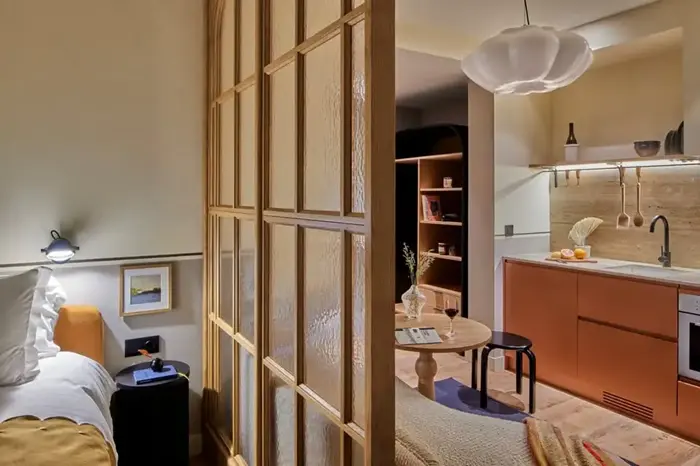
For digital nomads who want to spend several weeks in Lisbon, Locke de Santa Joana is one of the strongest examples of a hotel intentionally suited to longer stays. Trip.com describes the property as containing 370 serviced apartments, many with their own kitchens, alongside coworking areas, meeting rooms, restaurants, bars, a gym, and an outdoor swimming pool. It sits close to Avenida da Liberdade and Marquês de Pombal, with metro access nearby. Some room categories also include refrigerators and full apartment-style facilities, while Trip.com’s review summary highlights kitchenettes and washing machines in some accommodation types. This combination is especially valuable to someone who wants to work normal hours without renting a separate coworking desk every day, while the kitchen and laundry capabilities can reduce the inconvenience of a multi-week hotel stay. Lisbon can be expensive during busy periods, so enter the full length of your planned trip and compare cancellation options before reserving. For remote workers who prioritize coworking and apartment-style living, this property fits the travel trends 2026 shift toward hotels functioning as temporary homes. (Trip.com)
Check Locke de Santa Joana on Trip.com
The Social Hub Madrid — Madrid, Spain
The Social Hub Madrid Web Address: Cta. de San Vicente, 28, Moncloa – Aravaca, 28008 Madrid, Spain Phone: +34919011226
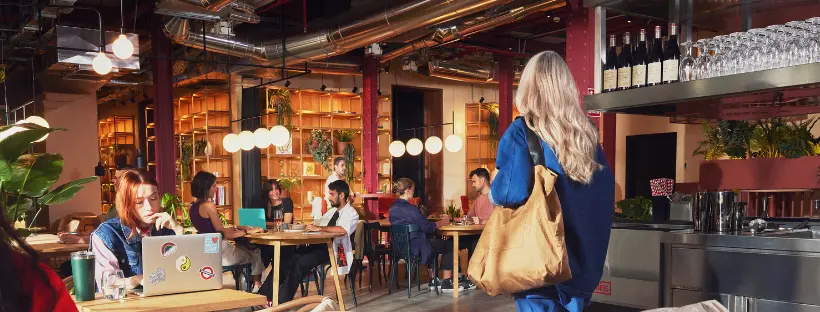
The Social Hub Madrid is a good option for remote professionals who prefer a more social environment while still having useful hotel facilities. Booking.com lists free Wi-Fi, a rooftop swimming pool, fitness center, terrace, restaurant, bar, lounge areas, laundry facilities, and a location close to Plaza de España Metro Station and Gran Vía. Rooms include modern amenities, and the hotel’s shared spaces can help solo travelers avoid the isolation that sometimes comes with working alone from a standard hotel room. Madrid itself works well as a longer-stay city because public transportation is extensive, restaurants and supermarkets are widely available, and international flight connections make it convenient for travelers moving between Europe and other regions. The Social Hub concept is particularly suited to professionals who enjoy meeting other travelers and working around active communal spaces. Those who need complete silence for confidential calls should still check the exact room category and recent reviews, but for digital nomads looking for a balance between community, location, and hotel facilities, it is one of Madrid’s more relevant choices. (Booking)
View The Social Hub Madrid on Booking.com
Somerset Rama 9 Bangkok — Bangkok, Thailand
Somerset Rama 9 Bangkok Web Address: 22 Ratchadaphisek Rd, Huai Khwang, Bangkok 10320, Thailand Phone: +6622391999
Bangkok is especially well suited to travelers who prefer serviced accommodation, and Somerset Rama 9 Bangkok provides the type of facilities that become valuable during a longer remote-work stay. Trip.com lists free Wi-Fi in room categories, an outdoor pool, gym, sauna, restaurant, conference facilities, and a location close to shopping and public transportation. Its guest-review summary also highlights spacious rooms containing kitchens and washing machines, which are particularly useful for people staying several weeks or traveling as a couple or family. This setup can reduce both food and laundry expenses while providing more living space than a conventional hotel room. Bangkok’s huge range of dining, malls, coworking spaces, and transportation makes it relatively easy to create an everyday routine, although digital nomads working North American hours should consider the significant time difference before committing to a long stay. For professionals who can set their own schedules, a serviced residence like Somerset Rama 9 can combine the convenience of hotel services with the practical features of a temporary apartment. (Trip.com)

Check Somerset Rama 9 Bangkok on Trip.com
U Nimman Chiang Mai — Chiang Mai, Thailand
U Nimman Chiang Mai Web Address: Nimmana Haeminda Rd Lane 1 Nimmanhaemin Suthep, Mueang Chiang Mai District, Chang Wat Chiang Mai 50200, Thailand Phone: +6652005111
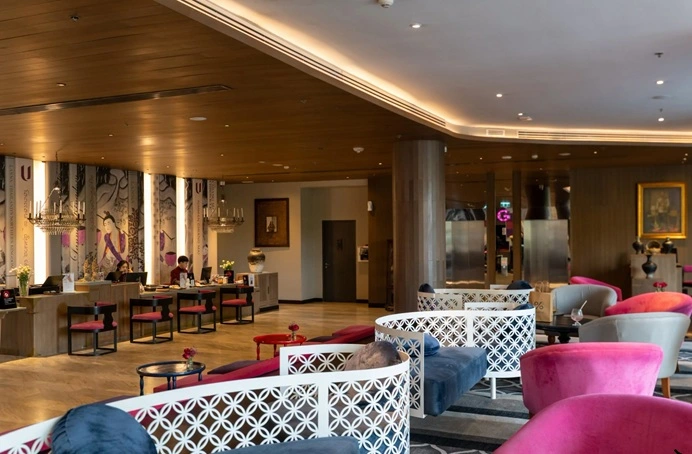
Chiang Mai remains attractive to people who want a smaller and generally slower-paced alternative to Bangkok. U Nimman Chiang Mai sits in the popular Nimmanhaemin area, placing guests close to cafés, restaurants, shopping, and other everyday services. Booking.com currently lists the property with an outdoor pool, sun terrace, and sauna, while Trip.com carries the hotel for current room and rate comparisons. The broader Nimman neighborhood is particularly useful for digital nomads because many destinations can be reached without crossing the entire city, which can make it easier to develop a predictable work routine. Chiang Mai also offers a different rhythm from resort destinations: weekdays can be focused on work while weekends are used for markets, temples, food, or trips into northern Thailand. U Nimman is a more upscale choice than the many budget guesthouses available in the area, so it will not be ideal for every nomad. However, professionals who value a polished hotel environment, fitness and leisure facilities, and a central Nimman location may find the additional cost worthwhile during a shorter workation or comfortable first stay. (Trip.com)
View U Nimman Chiang Mai on Trip.com
Tribal Bali Coworking Hostel — Bali, Indonesia
Tribal Bali Coworking Hostel Web Address: Gg. Tribal Jl. Pantai Pererenan, Pererenan, Kec. Mengwi, Kabupaten Badung, Bali 80351, Indonesia Phone: +6282147914973
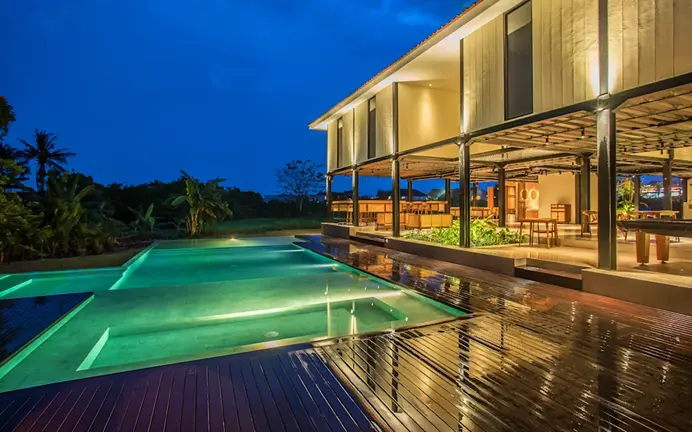
Travelers who want accommodation built around the digital-nomad community rather than simply adapted for it may prefer Tribal Bali Coworking Hostel in Pererenan. Trip.com lists coworking spaces, free Wi-Fi, a café, restaurant, outdoor pool, garden, and both shared and private room options. The property is also within walking distance of
Echo Beach. This makes it particularly appealing to solo travelers who want to combine affordable accommodation with opportunities to work and meet other remote professionals in the same place. The trade-off is that a social coworking hostel will not provide the same privacy as an apartment hotel, so consultants handling confidential calls or people who need completely silent working conditions may prefer a private serviced residence. For creators, freelancers, and independent professionals who value community, however, Tribal illustrates an important 2026 accommodation trend: the line between hotel, hostel, café, and coworking space is becoming increasingly blurred. Instead of traveling from a hotel to a separate office every morning, guests can sleep, work, eat, and socialize within one environment. (Trip.com)
Check Tribal Bali Coworking Hostel on Trip.com
Citadines Shinjuku Tokyo — Tokyo, Japan
Citadines Shinjuku Tokyo Web Address: 1 Chome-28-13 Shinjuku, Shinjuku City, Tokyo 160-0022, Japan Phone: +81353797208
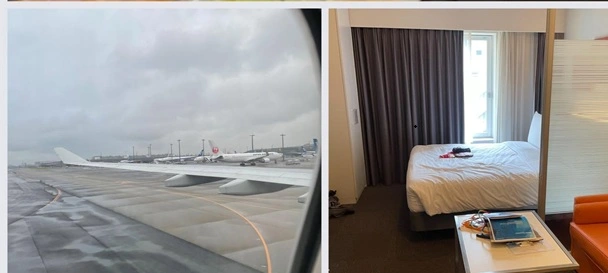
Citadines Shinjuku Tokyo is an excellent example of apartment-style accommodation for professionals who prefer the infrastructure and energy of a major global city. Booking.com lists studio apartments with fully equipped kitchenettes, desks, free Wi-Fi, wired internet, coin-operated laundry, and a 24-hour fitness room. It is also roughly a five-minute walk from Shinjuku Gyoenmae Subway Station, providing convenient access to other parts of Tokyo. These facilities make a meaningful difference during a two- or three-week stay. A kitchenette can control food costs in an expensive city, laundry reduces the amount of clothing needed, and wired internet offers an additional connectivity option for serious remote work. Tokyo will generally require a higher budget than many Southeast Asian digital-nomad destinations, but it provides world-class transportation, extensive food choices, and dependable urban infrastructure. For travelers who want to experience Japan while maintaining a structured work routine, Citadines is more practical than a room designed exclusively for short sightseeing trips. (Booking)
View Citadines Shinjuku Tokyo on Booking.com
Coworking Hotels and Coliving Spaces Are Becoming More Important
Community Is Becoming an Accommodation Feature
One weakness of the digital-nomad lifestyle is that moving frequently can make it difficult to build friendships or professional networks. Coworking hotels and coliving properties address this by combining private accommodation with shared working and social environments. Someone staying in a conventional hotel might spend eight hours alone in a room, while a coworking property offers desks, communal lounges, cafés, events, and opportunities to interact with people on similar schedules. This can be especially valuable for solo freelancers and entrepreneurs. However, community-focused accommodation is not automatically better. Employees handling sensitive corporate information may need greater privacy, families may require separate living areas, and travelers who are easily distracted might work more effectively from a quiet serviced apartment. The best option depends on personality and profession. The important travel trends 2026 development is that accommodation providers increasingly recognize “community” as something travelers may actively choose rather than something that happens by accident. Properties such as Tribal Bali and Locke de Santa Joana demonstrate two different versions of this idea—one social and hostel-oriented, the other combining serviced apartments with coworking and hospitality.
AI and Technology Will Shape Digital Nomad Travel
AI Can Help Travelers Build More Personalized Remote-Work Trips
AI is likely to become increasingly useful for travelers trying to manage the complexity of international remote work. A normal vacation may involve comparing flights, hotels, and attractions; a digital nomad must also consider visas, monthly budgets, Wi-Fi, time zones, coworking facilities, climate, transportation, tax questions, and employer policies. AI can help organize these variables, compare destinations, create packing lists, translate local information, or shortlist hotels based on specific needs such as a kitchen and gym. Booking.com’s 2026 prediction research suggests travelers are already open to technology-driven personalization, with 78% in one part of its research expressing openness to AI-powered recommendations tailored to particular travel interests. The limitation is accuracy. Immigration rules, tax thresholds, airline schedules, and hotel services change, so travelers should verify high-stakes information through government agencies or the current hotel listing. AI is most useful as a planning assistant rather than a substitute for official information. The likely future is a travel experience where a remote worker can specify “quiet room, kitchen, gym, fast internet, metro access, one-month stay” and receive options much more precisely matched to that lifestyle. (Booking News)
Remote Work Adoption and Employer Policies
Remote Does Not Automatically Mean Work From Anywhere
A common mistake among new digital nomads is assuming that permission to work from home also means permission to work from another country. Cross-border working can create immigration, payroll, tax, employment-law, insurance, data-protection, and cybersecurity obligations for employers. MBO Partners’ research illustrates why companies are becoming more deliberate about this issue: in 2025, 13% of traditionally employed U.S. digital nomads said their employer did not know they were nomadic, while another 18% said their company lacked a formal policy but their manager had given them permission. More organizations are developing explicit digital-nomad policies precisely because informal arrangements can create uncertainty. Employees planning international travel should therefore ask whether their employer allows it, whether some countries are restricted, how long they may work abroad, and whether company devices can be accessed internationally. Freelancers have more control over where they work but still need to follow immigration and tax rules. Sustainable digital nomadism is moving away from secretly opening a laptop abroad and toward clearer agreements between workers, employers, and destination governments. (MBO Partners)
Wellness and Remote Work Are Converging
Digital Nomads Want More Than Good Internet
Productivity during a long trip depends partly on what happens outside working hours. That is why wellness facilities are becoming more relevant to digital nomads. A hotel gym eliminates the need for a temporary fitness membership, while pools, walking routes, yoga spaces, and quieter neighborhoods can make it easier to maintain physical and mental routines during an extended stay. This may partly explain the appeal of destinations such as Bali, Chiang Mai, Lisbon, and coastal cities where travelers can combine professional schedules with outdoor activities. Wellness should not be confused with luxury, either. A practical gym, nearby supermarket, comfortable bed, and quiet environment may provide more long-term value than elaborate spa treatments. Remote professionals should also consider ergonomics. Eight hours working from a café chair or hotel bed can become uncomfortable quickly, so a good desk and suitable seating are health features as much as business amenities. The strongest workation hotels in 2026 are likely to combine dependable work infrastructure with opportunities to disconnect after work, allowing travelers to experience a destination without sacrificing routine or productivity.
Budget Travel Predictions for Digital Nomads
Long-Stay Value Matters More Than the Cheapest Nightly Rate
Digital nomads need to evaluate accommodation differently from conventional tourists because the lowest room price can hide other costs. A hotel that charges slightly less but lacks a kitchen might require the guest to eat every meal outside. A cheaper property far from public transportation can generate significant taxi costs. A room without a workspace may lead to purchasing a daily coworking pass, while expensive hotel laundry can quickly add up over a month. For this reason, long-stay value should include the complete lifestyle cost rather than the room rate alone. Serviced apartments can sometimes perform particularly well because kitchen facilities, washing machines, larger refrigerators, and living areas reduce everyday expenses. Shoulder-season travel may also help flexible professionals find more attractive accommodation deals, while staying farther from tourist hotspots can reduce costs if transportation remains convenient. Before reserving through Booking.com or Trip.com, enter the entire intended stay instead of comparing only a single night. Also check whether breakfast, taxes, cancellation rights, housekeeping, and other services are included. Saving money on a digital-nomad trip is often about reducing daily friction rather than simply choosing the cheapest available bed.
What Digital Nomads Should Look for in a Hotel
The Remote-Work Hotel Checklist
The first thing to check is internet reliability. “Free Wi-Fi” tells you very little about speed, stability, or whether video calls work well during busy periods, so recent guest reviews are valuable. Next, look for a genuine desk, comfortable chair, natural or strong artificial lighting, and enough electrical outlets. Travelers staying longer than one week should consider a refrigerator, kitchen or kitchenette, and practical laundry arrangements. Soundproofing becomes essential if meetings take place early in the morning or late at night because of time differences. Location should be evaluated according to everyday life rather than sightseeing alone: nearby supermarkets, metro stations, cafés, pharmacies, gyms, and coworking spaces can make a huge difference. Fitness facilities and pools are useful for longer stays, while flexible cancellation provides protection when visas or employer approvals are still uncertain. Finally, compare reviews on Booking.com or Trip.com specifically for words such as “Wi-Fi,” “desk,” “quiet,” “kitchen,” “work,” and “long stay.” The right hotel should make normal working life easier, not simply provide an attractive background for travel photos.
Challenges Behind the Digital Nomad Travel Boom
Mobility Comes With More Responsibility
The growth of digital nomadism creates opportunities but also introduces challenges for both travelers and destinations. Popular remote-work cities can experience higher accommodation demand and housing pressure, while travelers themselves may struggle with rising rents, unstable visa rules, tax uncertainty, and travel burnout. Time zones are another underestimated issue. A professional maintaining New York working hours from Bangkok may find that a beautiful destination produces an unhealthy overnight work schedule. Connectivity can also vary significantly between neighborhoods, and an accommodation listing that says Wi-Fi is available does not guarantee business-grade performance. Constant travel can eventually become tiring, which is one reason slower trips are increasingly attractive. There is also a compliance challenge: the existence of a digital-nomad visa in a country does not automatically mean every remote employee or freelancer qualifies. The strongest travel forecast for digital nomads is therefore not unlimited freedom without rules. Instead, the market is becoming more mature, with travelers expected to think about visas, employers, taxes, accommodation, healthcare, connectivity, and long-term sustainability before moving.
Travel Trends 2026 FAQs
What Are the Biggest Travel Trends 2026 for Digital Nomads?
The largest trends include longer stays, slower travel, more formal digital-nomad visas, AI-assisted planning, growing interest in serviced apartments, and hotels offering work-friendly facilities. Travelers are also becoming more selective about destinations. Price remains important, but internet reliability, visa rules, healthcare, safety, transportation, quality of life, and time zones increasingly influence decisions. Remote work adoption means more professionals have at least some flexibility, while the growth of company policies is making international work arrangements more structured. Accommodation is changing alongside this shift: kitchenettes, coworking spaces, laundry facilities, fitness centers, and longer-stay room types are becoming valuable selling points. The most successful remote workers are also moving away from constant country-hopping and toward creating temporary routines in one location. This does not mean every digital nomad will travel slowly or use a special visa, but it suggests the lifestyle is becoming more professional and less dependent on the early stereotype of spontaneous laptop travel.
Is Nomad Visa Expansion Likely to Continue?
Current evidence suggests that governments remain interested in attracting remote professionals. EY reported more than 50 jurisdictions with dedicated digital-nomad or remote-work visa programs by mid-2026 and more than 87 jurisdictions with some pathway allowing remote workers to live and work locally. Programs continue evolving as governments adjust income requirements, dependants, tax treatment, duration, and eligibility. South Korea’s 2026 formalization of its digital-nomad framework is one recent example of a pilot program becoming more established. However, future nomad visa expansion may involve refining existing programs rather than simply adding new countries. Destinations will need to balance economic benefits with housing availability, local infrastructure, and community concerns. For travelers, more programs are useful only if they match their circumstances. A visa with an attractive headline may still require income far above the applicant’s earnings, restrict local clients, or create tax considerations. Always compare the entire framework rather than selecting a destination based solely on the words “digital nomad visa.” (EY)
What Do Digital Nomad Demographics Look Like?
The latest U.S. research shows a population that is young but much more diverse than the common backpacker stereotype. MBO Partners found that Gen Z and Millennials represented 75% of U.S. digital nomads in 2025, but approximately 11% were aged 55 or older. Men represented 56%, women 43%, and nonbinary respondents 1%, while more than half were married or living with a partner. Traditional employees now form a significant part of the digital-nomad population alongside freelancers and entrepreneurs. These digital nomad demographics have direct consequences for accommodation. Younger solo travelers may gravitate toward coworking hostels, professional employees may choose business-friendly serviced residences, couples may want kitchens and larger rooms, and families can prioritize separate sleeping areas and laundry. There is therefore no single “digital nomad hotel.” The market ranges from budget hostels to luxury properties, and hotels that recognize these different traveler profiles are better placed to attract longer stays. (MBO Partners)
Are Serviced Apartments Better Than Traditional Hotels?
For stays of several weeks, serviced apartments often have practical advantages, but they are not automatically better. Their strongest features are usually kitchens or kitchenettes, refrigerators, washing facilities, more storage, and additional living space. Those benefits can significantly reduce the inconvenience of long stays. Traditional hotels may provide stronger housekeeping, concierge service, restaurants, spas, and central locations. Social hotels and coworking hostels offer yet another advantage: community. A solo nomad might value shared working spaces more than a private kitchen, while a couple working full time might strongly prefer a one-bedroom serviced apartment. Properties such as Locke de Santa Joana and Citadines Shinjuku Tokyo demonstrate why the distinction is becoming blurred—both provide apartment-style facilities while retaining hotel services. The best decision depends on working hours, budget, length of stay, privacy needs, and how much of daily life you want to manage yourself. For a month-long trip, compare both categories rather than limiting your search to conventional hotels.
Final Thoughts: What Comes Next for Digital Nomad Travel?
The story behind travel trends 2026 digital nomad remote work 2026 is that location-independent travel is becoming more organized and more diverse. Remote work adoption continues to influence how professionals think about where they live, while nomad visa expansion gives eligible travelers more legal options for longer international stays. At the same time, digital nomad demographics show that the market now includes traditional employees, freelancers, entrepreneurs, couples, families, younger professionals, and older travelers with very different expectations. The broader travel forecast also remains significant, with WTTC expecting Travel & Tourism to contribute around $12 trillion to the global economy in 2026. Hotels are responding by combining accommodation with coworking, apartment facilities, gyms, kitchens, laundry, social spaces, and extended-stay services. For travelers, this means the hotel should no longer be an afterthought. Compare Booking.com and Trip.com carefully, check current reviews, and prioritize the features that will actually support your daily working routine. The future digital nomad may still travel for adventure—but increasingly, they will choose accommodation as thoughtfully as they choose the destination itself. (World Travel & Tourism Council)